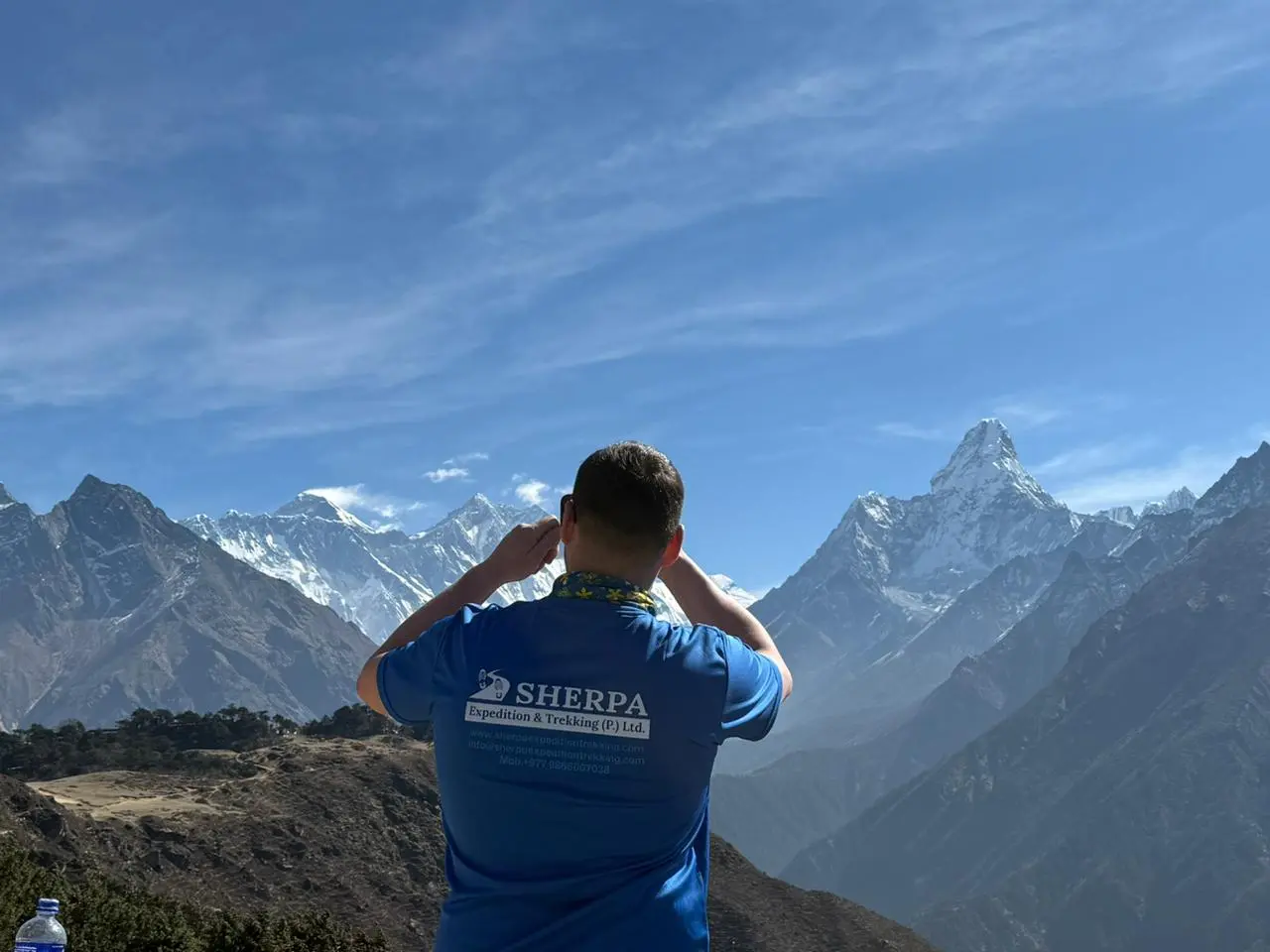
EVEREST BASE CAMP TREK VIA RENJO LA AND CHO LA PASS
USD 1,350 / Per Person
Trip Overview
If you are searching for the ultimate Himalayan adventure, the 14-Day Renjo La and Cho La with Everest Base Camp Trek is one of Nepal's most rewarding and scenic high-altitude journeys. Expertly designed by Sherpa Expedition and Trekking, this itinerary combines two legendary mountain passes, the iconic Gokyo Lakes, and the world-famous Everest Base Camp into a single breathtaking circuit
The adventure begins with a scenic flight into Lukla, the gateway to the Khumbu region. From here, trekkers follow the classic trail through Phakding and on to the vibrant Sherpa town of Namche Bazaar, the commercial heart of the Everest region sitting at 3,440 metres. Namche includes a vital acclimatization day, allowing your body to adapt to altitude while you explore its colourful market, local monasteries, and iconic views of Thamserku and Ama Dablam.
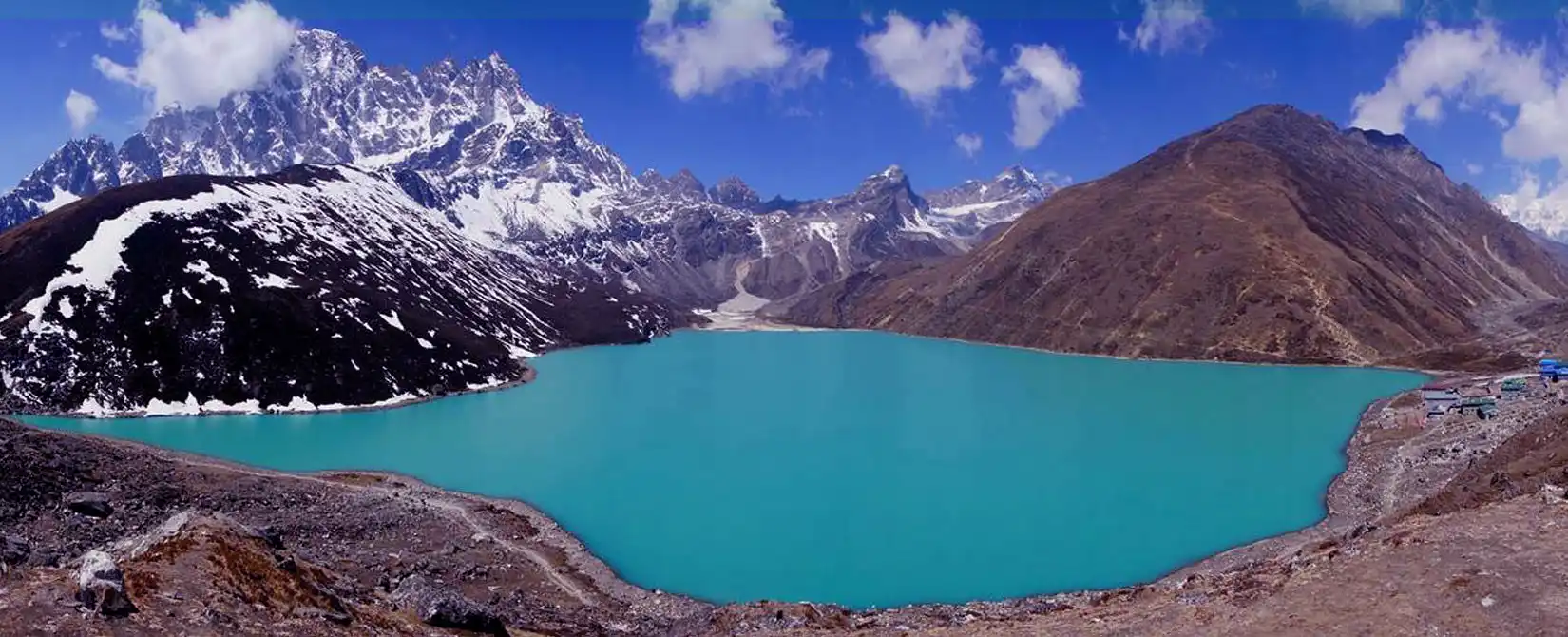
After Namche, the route heads northwest through Lungden, a remote and quiet village that serves as the launching pad for the first major highlight: the Renjo La Pass (5,360m). This crossing rewards trekkers with panoramic views of Everest, Lhotse, Makalu, and the glittering Gokyo valley far below. Descending from the pass, you arrive at the Gokyo Lakes — a series of sacred turquoise glacial lakes nestled beneath the massive Ngozumpa Glacier. An early morning hike up Gokyo Ri (5,357m) delivers one of the finest sunrises in the entire Himalayas, with a 360-degree panorama that rivals Kala Patthar itself.
From Gokyo, the trail crosses the challenging and exhilarating Cho La Pass (5,420m) — a glaciated route that demands both physical fitness and sure footing. Beyond the pass lies Lobuche, from where trekkers push on through the rugged Khumbu Valley to reach Everest Base Camp (5,364m) itself. Standing beneath the roaring Khumbu Icefall surrounded by towering peaks is an experience that leaves every trekker speechless. The following morning, the hike up Kala Patthar (5,550m) provides the best direct view of Mount Everest's summit — the defining photograph of the entire journey.
The descent follows the valley through Pangboche, home to one of the oldest monasteries in the Khumbu, before returning to Namche Bazaar for a final night in the mountains. From Namche, the well-worn trail leads back to Lukla, where a short flight returns you to the energy and warmth of Kathmandu.
This itinerary has been carefully crafted by the experts at Sherpa Expedition and Trekking to ensure safe acclimatization, maximum scenery, and an authentic Sherpa cultural experience. From the glacial passes to the sacred lakes and the foot of the highest peak on earth, this 14-day trek is not just a walk — it is a transformational adventure through the roof of the world.
EVEREST BASE CAMP TREK VIA RENJO LA AND CHO LA PASS Day-by-day ITINERARY
Your Himalayan adventure begins with an exhilarating early morning mountain flight from Kathmandu to Lukla's legendary Tenzing-Hillary Airport. As the small aircraft weaves between snow-capped peaks, your first glimpse of the Khumbu region sets the tone for the incredible journey ahead. Upon landing in Lukla, meet your Sherpa guide and porters, complete final preparations, and begin your first steps on the trail. The path descends gently through lush rhododendron forests and terraced farmland, following the bank of the Dudh Koshi River to the quiet riverside village of Phakding. Overnight at teahouse in Phakding.
Today's walk is one of the most scenic on the entire route. The trail crosses several suspension bridges draped with colourful prayer flags, each swing offering thrilling views of the roaring river below. As you enter the boundaries of Sagarmatha National Park at Monjo, the landscape grows increasingly dramatic. The final steep climb to Namche Bazaar rewards every step — as you crest the ridge, the majestic peaks of Everest, Lhotse, and Thamserku appear for the first time. Namche Bazaar, the vibrant capital of the Khumbu Sherpa community, bursts with bakeries, gear shops, lodges, and local life. Overnight at teahouse in Namche Bazaar.
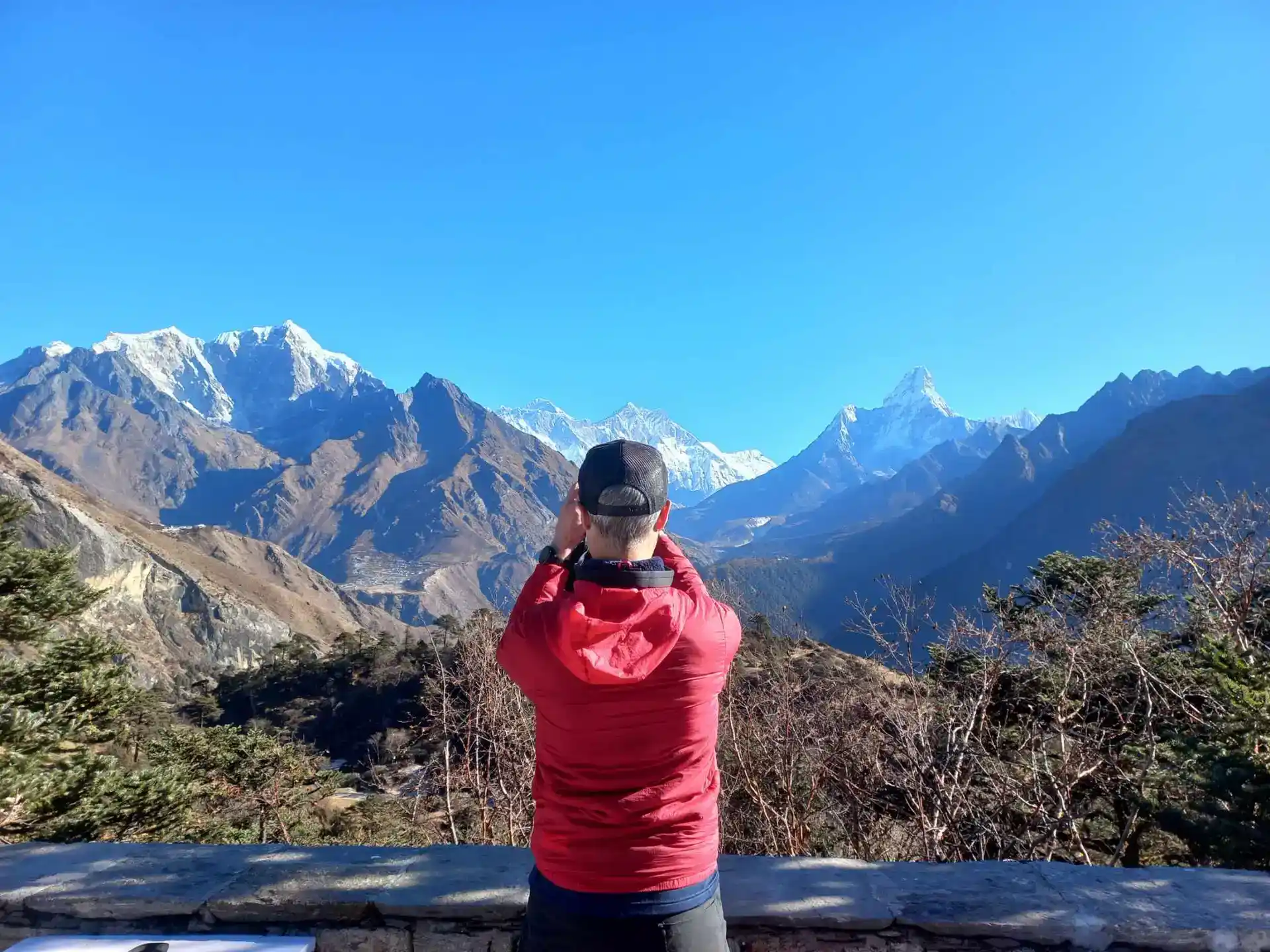
Acclimatization is not optional at altitude — it is the key to a safe and successful trek. Today is dedicated to allowing your body to adapt gradually to the reduced oxygen levels at 3,440 metres. A recommended acclimatization hike to the Everest View Hotel above Namche offers breathtaking panoramic views of Everest, Ama Dablam, Thamserku, and Kantega without gaining significant permanent altitude. Back in town, explore the colourful Saturday market, visit the Sherpa Culture Museum, browse local monasteries, or simply rest and hydrate. Eat well, drink plenty of water, and sleep early. Overnight at teahouse in Namche Bazaar.
Leaving the bustle of Namche behind, today's trail heads northwest into the quieter and less-travelled Bhote Koshi Valley. The path winds through juniper and pine forests, passing small Sherpa settlements and ancient mani walls carved with sacred Buddhist prayers. The village of Thame is one of the most culturally significant in the entire Khumbu region — home to a revered hilltop monastery and the birthplace of legendary mountaineers including Apa Sherpa. The slower pace of life here and the sweeping valley views make Thame a deeply peaceful and memorable stop. Overnight at teahouse in Thame.
The trail continues its ascent up the remote Bhote Koshi Valley, climbing steadily through high-altitude terrain where yak herders graze their animals on wide open pastures. The landscape becomes increasingly raw and beautiful as the tree line fades and dramatic rocky ridges take over. The small settlement of Lungden sits in a wide glacial valley and serves as the final stop before the formidable Renjo La Pass crossing. Tonight, prepare your gear carefully, rest as much as possible, and hydrate well in readiness for the biggest single day of climbing on the entire trek. Overnight at teahouse in Lungden.
This is one of the most spectacular and rewarding days of the entire journey. An early start is essential as the trail climbs steeply through boulder fields and snow towards the summit of Renjo La Pass at 5,446 metres. The effort is magnificently rewarded at the top — a sweeping 360-degree panorama unfolds, featuring Mount Everest, Lhotse, Makalu, Cho Oyu, and the shimmering Gokyo Lakes glittering far below in the valley. The descent from the pass is steep and requires careful footing before the trail levels out and leads to the sacred shores of Gokyo Lake, the largest glacial lake in the Khumbu. The turquoise water set against the towering Ngozumpa Glacier is a sight of extraordinary beauty. Overnight at teahouse in Gokyo.
Rise before dawn for the pre-sunrise climb up Gokyo Ri, one of the finest viewpoints in the entire Himalayas. As the first golden light of morning touches the summit of Everest and spills across the peaks of Lhotse, Makalu, and Cho Oyu, the world feels utterly still and impossibly vast. The panorama from the summit rivals Kala Patthar and is considered by many experienced trekkers to be even more beautiful. Descend back to Gokyo and continue along the valley to the tranquil yak herding settlement of Thangnak, where the scale of the Ngozumpa Glacier — the longest glacier in Nepal — becomes truly apparent. Overnight at teahouse in Thangnak.
Another major highlight awaits as today's trail tackles the Cho La Pass, a glaciated high crossing that demands both physical strength and careful footwork. The ascent is steep and the upper section crosses a small glacier where trekking poles and microspikes are essential. At the top of the pass, prayer flags flutter in the thin cold air and the views across the Khumbu are extraordinary. The descent on the far side is rocky and requires concentration before the terrain eases and the small cluster of teahouses at Dzongla comes into view, nestled beneath the dramatic south face of Cholatse peak. Overnight at teahouse in Dzongla.
A comparatively shorter day on the trail, today's walk follows the lateral moraine of the Khumbu Glacier through a stark and hauntingly beautiful high-altitude landscape. En route, you pass the Lobuche memorial site — a moving collection of stone memorials erected in honour of mountaineers and Sherpas who lost their lives on Everest and surrounding peaks. The solemnity of this place offers a profound moment of reflection before the final push to base camp tomorrow. Arrive in Lobuche in good time to rest, rehydrate, and prepare mentally and physically for the most significant day of the entire trek. Overnight at teahouse in Lobuche.
The day every trekker on this journey has been working towards finally arrives. After breakfast, the trail continues along the rugged moraine of the Khumbu Glacier, passing the last settlement of Gorak Shep and pushing on across rocky, wind-swept terrain to the legendary Everest Base Camp at 5,365 metres. Standing at the foot of the Khumbu Icefall, surrounded by towering seracs of blue ice and the world's highest peaks, is an overwhelming and deeply emotional experience. Soak in every moment before making the return journey to Gorak Shep for a well-earned rest. Overnight at teahouse in Gorak Shep.
Set your alarm for before sunrise and begin the steep pre-dawn climb up Kala Patthar, the highest point of the entire trek at 5,555 metres. As daylight breaks and illuminates the full south face of Mount Everest in shades of gold and amber, you will understand why this viewpoint is considered the defining image of the entire Khumbu experience. No photograph can fully capture the scale and majesty of the world's highest peak seen from this vantage point. After descending from Kala Patthar, the trail drops significantly in altitude through the Khumbu Valley, the air growing noticeably warmer and richer with every step. Overnight at teahouse in Pheriche.
With the high passes and base camp behind you, today is a long but thoroughly enjoyable valley walk back towards the familiar comforts of Namche Bazaar. The descending trail passes through the historic village of Pangboche, home to one of the oldest Buddhist monasteries in the Khumbu, before continuing through Tengboche with its famous hilltop monastery and sweeping Himalayan backdrop. By the time Namche Bazaar comes into view, the sense of achievement is profound. Celebrate the trek over a warm meal, treat yourself to a bakery stop, and reflect on the extraordinary journey completed over the past two weeks. Overnight at teahouse in Namche Bazaar.
The final day of trekking follows the familiar trail back down through the Dudh Koshi Valley, retracing the suspension bridges and forested paths walked on the very first day. The descent feels faster than the ascent, and the sights, sounds, and smells of the lower valley — birdsong, blooming rhododendrons, the rush of the river — feel rich and vivid after so many days at altitude. Arriving back in Lukla is a deeply satisfying moment. Enjoy a celebratory dinner with your guide and porters, exchange stories from the trail, and offer well-deserved tips to the team who made the journey possible. Overnight at teahouse in Lukla.
Rise early for the final mountain flight back to Kathmandu. As the aircraft lifts off from Lukla's short runway and the Himalayan peaks recede behind you, the full magnitude of what you have accomplished begins to sink in. You have crossed two legendary high mountain passes, stood at the foot of the world's highest peak, gazed across the sacred Gokyo Lakes, and witnessed some of the most breathtaking landscapes on the planet. Upon arrival in Kathmandu, your Sherpa Expedition and Trekking representative will be waiting to transfer you to your hotel, where a hot shower, a comfortable bed, and the warmth of the city await.
EVEREST BASE CAMP TREK VIA RENJO LA AND CHO LA PASS INCLUDES & EXCLUDES
What's Included in Your Trekking Package:
- Airport Transfers: Domestic airport pick-up and drop-off by private car/jeep.
- Meals: Three meals a day (breakfast, lunch, and dinner) throughout the trek.
- Fresh Fruit: Fresh fruit provided every evening after dinner.
- Accommodation: Stay in trekking lodges (Tea Houses) during the trek.
- Permits: All necessary paperwork including Sagarmatha National Park Entry Permit and Khumbu Pasang Lhamu Rural Municipality fees.
- Flights: Kathmandu-Lukla-Kathmandu (Ramechhap-Lukla-Ramechhap) flights with private airport transfer and domestic airport taxes.
- Guides and Staff:
- A highly experienced, English-speaking, government-licensed guide, covering their salary, food, drinks, accommodation, transport, and insurance.
- Strong, helpful Sherpa porters (one porter per two trekkers), with their salary, food, accommodation, and insurance, along with proper safety and walking equipment.
- Assistant guide for groups of 8 or more.
- Medical Support: Comprehensive medical supplies (first aid kit) and arrangements for emergency helicopter services (paid by your travel insurance).
- Equipment: Use of a sleeping bag, down jacket, duffel bag, and walking poles (to be returned at the end of the trek).
- T-Shirt: A Sherpa Expedition and Trekking T-shirt.
- Government Taxes & Official Fees: All applicable government taxes and official expenses.
- Trip Achievement Certificate: Certificate awarded upon successful completion of the trek.
- Health Monitoring: Oxygen meter to monitor your pulse, oxygen saturation, and heart rate twice daily, ensuring your health and well-being during the trek.
What's Not Included in Your Trekking Package:
- Meals in Kathmandu: Lunch and dinner while you are in Kathmandu.
- Hotel Accommodation in Kathmandu: Costs for hotel stay in Kathmandu before and after the trek.
- Nepal Entry Visa: The visa fee for Nepal, which is easy to obtain on arrival at Tribhuvan International Airport in Kathmandu:
- $30 USD for a 15-day visa
- $50 USD for a 30-day visa
- $125 USD for a 90-day visa
- Personal Travel and Medical Insurance: Travel and medical insurance for the duration of your trip (highly recommended for coverage).
- International Airfare: Your international flights to and from Nepal.
- Personal Expenses: Any personal purchases such as souvenirs, snacks, or items not specified in the package.
- Beverages: Alcoholic and non-alcoholic drinks, including soup, tea, coffee, hot chocolate, cocoa, mineral water, and any extra food or drinks you choose to purchase along the trek and in the tea houses.
- Desserts and Sweets: Items like chocolate, cake, pie, pudding, and other sweet treats.
- Hot Showers and Battery Charging: Charges for hot showers and battery charging at the tea houses along the trek.
- Tips: Tipping for the guide, porter, and driver (tipping is expected in Nepal).
- Excess Baggage: Any baggage weight exceeding the 10 kg limit for the Lukla flight.
Note: If you return early from the trek due to sickness or other issues, the fees for flights, hotels, mountain rooms, food, etc., are nonrefundable. You will need to bear any additional expenses for hotel stays, food, etc., in Kathmandu on your own.
EVEREST BASE CAMP TREK VIA RENJO LA AND CHO LA PASS Departures
Every departure listed below is 100% Guaranteed — once you book, your trip will run as scheduled regardless of group size.
Select a departure month
Fill out the form below and a Travel Expert will reach out to create your perfect tour.
ROUTE MAP OF EVEREST BASE CAMP TREK VIA RENJO LA AND CHO LA PASS
EVEREST BASE CAMP TREK VIA RENJO LA AND CHO LA PASS PACKING LIST
The following information will give you some idea about what you need to bring for the trek. It is important you do not forget the essential items, as this will determine your comfort and safety on the trek. Equally important is that you do not burden yourself with unnecessary equipment on the trek.
General
- All season sleeping bag and down Jacket (we can provide if you need it, but has to be returned after the trek)
- Duffle bag ( Sherpa Expedition & Trekking provide duffle bag during the trek but has to be returned after the trek)
- A wind and waterproof thin layered jacket (a must-have for morning and evenings above 3,000m)
- Daypack
Upper Body- Head / Ears / Eyewear
- A pair of half gloves
- A warmer hat that covers the ears
- Sunglasses
- Neckwarmer
- Sunscreen (35 to 60 SPF)
- Headlamp and an extra set of batteries
Hands
- A pair of half gloves for walking poles(if you prefer)
- Warmer shell gloves and liner
Upper Body
- long sleeve t-shirts
- Thermal tops
- wool jacket or pullover
- Sports bras for women and girls
- Water and windproof shell jacket
Lower Body
- Thermal underwear (especially trousers)
- windproof and waterproof trousers
- warmer trousers
- Comfortable trekking pants
- Extra casual sport pants
Footwear
- A pair of good waterproof trekking boots
- Pair of sandals
- 4-5 pairs of woolen socks
- Sock liners
- Light shoes and sneakers
- First Aid Kits and Medicines
- Assorted adhesive bandages (fabric preferred)
- Blister treatment cream or similar
- Insect / anti-itch ointment
- Ibuprofen or other pain-relief medication
- Diamox (125mg to 250mg tablets for altitude sickness)
- Warps, splints, and wound coverings butterfly bandage
- Water purifying pills
(Note our company guide will carry the medicines and first aid kits during the trek. However, we recommend you bring your personal first-aid kit as well)
Miscellaneous - but must useful on the trek
- 4 passport size photos with original passport
- Water bottle & filter
- Flight details (please make a copy and leave one pic at our office in KTM because in case you want to change your flight date)
- Bathroom kit (conform, should be included toilet paper, plastic bags, hand wipes, towel, and soap, etc.)
Extra things
- Comfortable trekking poles
- Quality energy dry foods (up to you)
- Power bank and music players
- Camera (memory card, chargers, and extra batteries)
Gallery of EVEREST BASE CAMP TREK VIA RENJO LA AND CHO LA PASS

GOOD TO KNOW ABOUT EVEREST BASE CAMP TREK VIA RENJO LA AND CHO LA PASS
Best trekking season
Spring (March–May) and Autumn (September–November) offer the clearest skies and most stable trail conditions. Winter crossings of Renjo La and Cho La can be dangerous due to heavy snowfall and ice.
Altitude & acclimatization
The trek reaches 5,550m at Kala Patthar. Never skip acclimatization days — particularly in Namche Bazaar. Ascend slowly, drink 3–4 litres of water daily, and descend immediately if symptoms of AMS (headache, nausea, dizziness) worsen.
Permits required
You will need a Sagarmatha National Park Entry Permit and a Khumbu Pasang Lhamu Rural Municipality Permit. Sherpa Expedition and Trekking arranges all permits on your behalf before departure from Kathmandu.
Travel insurance
Comprehensive travel insurance is mandatory. Your policy must cover high-altitude trekking above 5,000m and helicopter evacuation. Verify your coverage carefully — standard travel policies rarely include altitude rescue.
Physical fitness level
This is a challenging trek rated for trekkers with good fitness. Prior high-altitude or multi-day trekking experience is strongly recommended. Begin training 2–3 months in advance with cardio, hiking, and strength workouts.
Budget & costs on trail
Teahouse accommodation and meals are included in the Sherpa Expedition package. Carry extra USD or Nepalese Rupees for personal snacks, hot drinks, battery charging, Wi-Fi cards, and tips for guides and porters.
Food & water on the trail
Teahouses serve dal bhat, pasta, soup, and local dishes. Always drink boiled or purified water — tap water at altitude is unsafe. Carry water purification tablets or a filter bottle as a backup, especially on high-pass crossing days.
What to pack
Layer clothing is essential. Pack thermal base layers, a fleece mid-layer, a down jacket, waterproof outer shell, trekking poles, crampons or microspikes for icy passes, a quality sleeping bag rated to −15°C, sunscreen, and lip balm.
Communication & connectivity
Mobile signal (NTC/Ncell) is available in most villages but unreliable on high passes. Namche, Gokyo, and Lobuche have paid Wi-Fi at teahouses. Consider renting a satellite communicator for emergency contact during remote sections.
Lukla flights
Lukla airport is one of the world's most weather-sensitive airstrips. Flights are frequently delayed or cancelled due to fog and wind. Build at least 1–2 buffer days in Kathmandu at the end of your trek to avoid missing international connections.
Guides & porters
All Sherpa Expedition treks include a licensed English-speaking guide and porters. Porters carry a maximum of 15kg per person. Hiring local guides directly supports Khumbu communities and ensures your safety on technical glacier crossings.
Respect local culture
Always walk clockwise around mani walls, prayer wheels, and stupas. Remove shoes before entering monasteries, dress modestly at religious sites, and ask permission before photographing local people. Leave no trace — pack out all waste.
RELATED PACKAGES


FAQS Related to EVEREST BASE CAMP TREK VIA RENJO LA AND CHO LA PASS
Others
This trek is rated as challenging and is best suited for trekkers with a reasonable level of physical fitness and some prior hiking or trekking experience. The trail involves multiple high-altitude passes, long walking days of 6 to 8 hours, and glacier crossings. No technical climbing skills are required, but good cardiovascular fitness and mental determination are essential. Sherpa Expedition and Trekking recommends beginning a dedicated training programme at least 2 to 3 months before departure.
The highest point of the trek is Kala Patthar at 5,550 metres above sea level, which offers the most iconic direct view of Mount Everest's summit. Other significant high points include Cho La Pass at 5,420 metres, Renjo La Pass at 5,360 metres, and Everest Base Camp at 5,364 metres. Proper acclimatization days are built into the itinerary to help your body safely adjust to these elevations.
The two ideal seasons are Spring, from March to May, and Autumn, from September to November. During these months, the weather is generally stable, skies are clear, and trail conditions are at their safest for crossing high mountain passes. Summer brings heavy monsoon rain and poor visibility, while winter crossings of Renjo La and Cho La carry serious risks due to deep snow and extreme cold.
Previous high-altitude or multi-day trekking experience is strongly recommended for this itinerary. Because the route crosses three high passes and reaches elevations above 5,500 metres, trekkers who have never spent time at altitude before may find the journey significantly more demanding. If you are new to trekking, Sherpa Expedition and Trekking can recommend shorter preparatory treks in Nepal to build your confidence and fitness before attempting this route.
Two main permits are required. The first is the Sagarmatha National Park Entry Permit, which grants access to the protected Everest region. The second is the Khumbu Pasang Lhamu Rural Municipality Permit. Both permits are arranged by Sherpa Expedition and Trekking before you leave Kathmandu, so you can focus entirely on preparing for the adventure ahead.
Yes, comprehensive travel insurance is absolutely mandatory. Your policy must specifically cover high-altitude trekking above 5,000 metres and helicopter evacuation in the event of a medical emergency. Standard holiday or travel insurance policies often exclude altitude rescue, so it is vital to read the fine print and confirm your coverage before departing for Nepal.
Throughout the trek, you will stay in local teahouses, which are family-run mountain lodges offering simple but comfortable rooms with beds, blankets, and shared facilities. Meals are served at the teahouse dining hall and typically include dal bhat, pasta, noodle soup, porridge, omelettes, and local Sherpa dishes. Sherpa Expedition and Trekking includes teahouse accommodation and meals in the package price, so you can travel with confidence knowing your essentials are covered.
Altitude sickness, known as Acute Mountain Sickness or AMS, is a genuine risk on any high-altitude trek. The best prevention is to ascend slowly, follow the planned itinerary without rushing, drink 3 to 4 litres of water each day, and never ignore symptoms such as persistent headache, nausea, or dizziness. Acclimatization days in Namche Bazaar are included specifically to help your body adjust. Your guide from Sherpa Expedition and Trekking is trained to recognise AMS symptoms and will arrange a descent or evacuation if necessary.
The trek begins in Lukla, which is accessed by a short scenic mountain flight from Kathmandu. The flight takes approximately 35 to 45 minutes and lands at Tenzing-Hillary Airport, one of the world's most famous mountain airstrips. It is important to note that Lukla flights are highly weather-dependent and can be delayed or cancelled without much notice. Sherpa Expedition and Trekking strongly advises booking at least one or two buffer days in Kathmandu at the end of your trip to avoid missing international flights home.
Unlike a standard Everest Base Camp trek, this 14-day itinerary includes two legendary high mountain passes — Renjo La and Cho La — as well as a visit to the stunning Gokyo Lakes and a sunrise hike up Gokyo Ri. This combination gives trekkers a far wider and more diverse experience of the Khumbu region, including remote glacial valleys, sacred alpine lakes, and sweeping panoramic views that few trekkers ever witness. It is one of the most complete and rewarding Himalayan adventures available in Nepal, and it is exclusively designed and operated by Sherpa Expedition and Trekking.
Latest Traveller’s Reviews
Travel experiences of our clients who recently returned from their trips.
100% of travellers recommend this trip
Based On 5351 Reviews
THANKS!
Amazing Experience!
Professional Trek, Heartfelt Memories – Led by Tshering

Write Your Review
Average Customer Ratings
How The Travellers Have Rated This Package
5242
107
2
0
0


