
MANASLU CIRCUIT TREK
USD 1,290 / Per Person
Manaslu Circuit Trek Route Overview
Manaslu Circuit Trek, considered one of the finest trekking routes in Nepal, passes through the locality of Mount Manaslu, Manaslu Nepal - the world's 8th tallest peak and involves picturesque scenery in high valleys, high passes, and beautiful mountain villages. A Manaslu Circuit Trek Nepal offers you an off-the-beaten-path tour to trek with moderately strict teahouse-based Manaslu trekking. But this Manaslu Circuit Trek requires good physical condition along with spending many days walking at high altitude.
The Manaslu trek starts from the lowlands of Machha Khola and reaches to Besisahar, creating an ideal overland route that can be combined with the famed Annapurna Circuit Trek. For this reason, the Manaslu circuit remains one of the most popular extensions for those wishing to combine these famous circuits in one trip.
This beautiful trek takes you along the beautiful stream valleys of Budhi Gandaki River. This trek crosses several swaying suspension bridges and has some amazing waterfalls roaring down from mountain sides. It will also take you through lovely pines forest into the protected area called Manaslu Conservation Area. Stone villages are dotted here and there that display wonderful Tibetan-influenced Buddhist culture, such as mani walls, chortens, and monasteries. These things make your entire trek more exciting because when you come close to the Tibetan border, then all those unique cultures will be fully exposed for you.
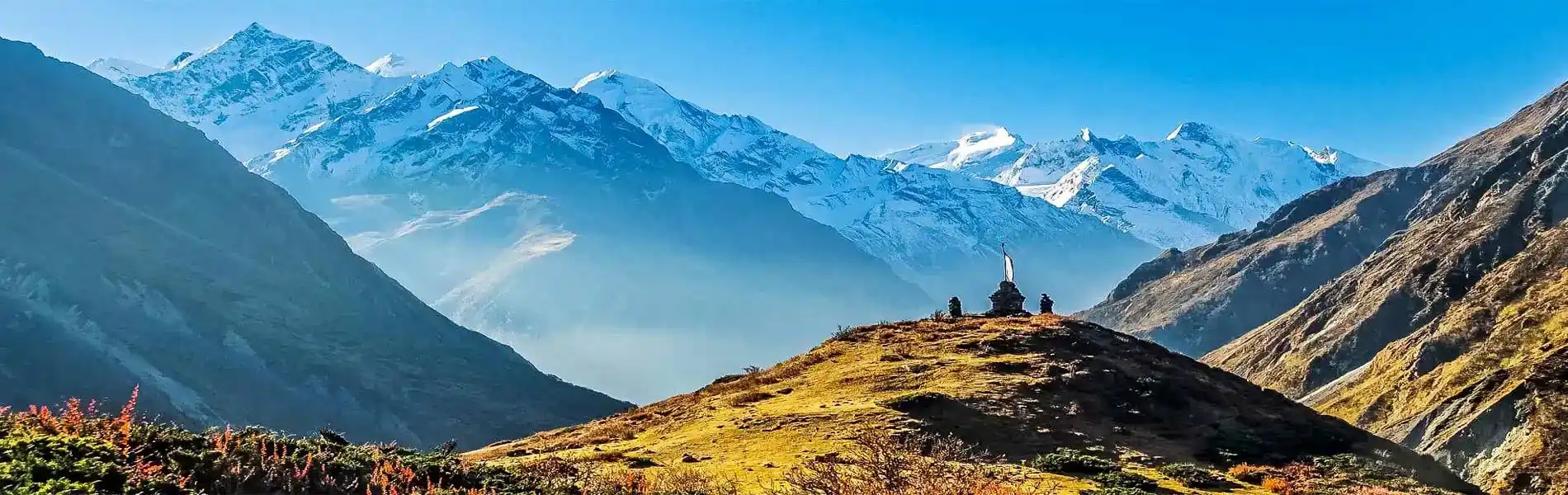
You can get a view of towering majestic peaks of Manaslu Himal, Manaslu Peak, Manaslu Mountains, Ganesh Himal, Cheo Himal, Nemjung, Gyaji Kang, Kang Guru, Himlung Himal, Annapurna II, and many other Himalayan mountains within the Himalayan ranges as you walk along. These were just some amazing mountains’ names that we have shared with you, which are quite worth seeing during this trekking journey. But the most challenging part while taking this trekking tour will be to cross the famous Larkya La pass (5,106m) where trekkers will be rewarded with a panoramic view of the beautiful Mt. Manaslu and the other nearby mountains from there. Afterward, they will descend towards the Annapurna side. Since our route traverses through some restricted area and conservation area a guide must have Nepal Government Licensed Trekking Guide with a special permit and ACAP permit too. This means you can do this trek independently but you need to go on with a guide.
When booking a Manaslu Circuit Trek from Sherpa Expedition and Trekking, everything will be taken care of, and it’s absolutely hassle-free. Don't need to get worried at all about the permit process for Manaslu Circuit Trek since we arrange everything including transport, licensed guide, porter and even tea house accommodation. Just relax and enjoy the best of your trip with an incredible view of Nepal's himalayan mountain range.
Manaslu Circuit Trekking Highlights
- Be face to face with the world's 8th highest mountain which is one of the huge giants of the Himalayas. Due to the giant's huge height and visuals you would enjoy a very long, mesmerizing walk viewing the scenic surroundings while walking along without disturbing anyone.
- Tread across the historical Larkya La Pass, the highest peak of the entire trip. The prayer flags waving in the thin air will be present when you make it to the highest point of the climb, from where you can see the panoramic views of snow-capped peaks and glaciers as well as the way ahead through the mist down to the Annapurna region.
- Combine two breathtaking areas into one trip. Following this unique combination, you will go through remote villages in Manaslu area later connecting the classical tracks of Annapurna area.
- Get to the Tibetan border, along which it was easy to conduct trade in the past. Along this area you will be able to see the scenic views of the fringes of civilization left after the trans-Himalayan trade and vast elevations.
- A journey into this remote region will bring you closer to the Tibetan frontier along ancient Himalayan trade routes. Explore an area of breathtaking high altitude scenery with interesting insights into borderland living as well as ancient trans-Himalayan trade history.
- Wander around the centuries-old Tibetan Buddhist heritage villages with stone houses, yak herding, traditional dresses, monasteries, etc., that are quite different from those found elsewhere in Nepal (in particular those down in the lowlands).
- Uninterrupted views of some big names in Nepal’s snowy mountain skyline – from Ganesh Himal to Himlung Himal, Annapurna II, and many more. Each day you’ll be seeing a new angle on these majestic snow-capped ridges which make this one of the most visually-rewarding high altitude treks around!
- Walk amidst dense rhododendrons, pines and bamboo with the beautiful wildlife of Himalayan Tahr, Langurs and Snow Leopards. The Manaslu Conservation area offers an environment full of diverse species of flora and fauna which gives you that “Wild” untouched feeling while trekking here.
- The roaring Budi Gandaki river with its deep gorges, thundering waterfalls and ever-present sounds of rushing water accompany you through large portions of your journey on the lower and middle trail sections.
- The cross-dramatic swinging suspension bridges strung high above the Budi Gandaki gorge are draped with prayer flags to provide adventure and iconic photo opportunities on this scenic trail that winds through cliffside villages.
- Walk through several sacred monasteries nestled within this peaceful Nubri valley, such as the remote one of Pungyen Gompa near the base of the formidable Manaslu.
- Chortens (shrines), mani stone walls, and spinning prayer wheels can be found all around the track - showing how deeply rooted the Buddhist faith is to these people’s lives.
- Take a short side hike to discover the beautiful turquoise waters of Birendra Lake, near Samagaon. The turquoise waters surrounded by Glaciers and Moraine makes this place one of those peaceful sceneries where you should take a short side hike for sure.
- Continue hiking towards Manaslu Basecamp to enjoy close-ups of the mighty south face. This optional side-trip will satisfy the adventurers amongst you with great glacier scenery that gives you an authentic feel of real mountaineering.
Where is Mount Manaslu Located?
Manaslu mountain stands tall at a height of 8,163 m from sea level. And it is the world’s 8th tallest mountain, located in the Manaslu region of Nepal, specifically the northern part of Gorkha District in Gandaki Province.
It's also called "Mount Manaslu". It belongs to the Mansiri Himal range in Nepalese Himalayas, just near the Nepal Tibet border having its peak on the Nepal side only. The surrounding area around Mount Manaslu, along with other mountains, forests, wildlife and traditional villages nearby, is all protected by the Manaslu Conservation Area.
Other popular regions that are connected to the Himalayas can be found on both sides of this region. On the western side lies the Annapurna range. On the other hand, the Ganesh Himal range can be seen on the eastern side of this beautiful place.
The most essential geographical point regarding the whole Manaslu region is the existence of Mount Manaslu as it stands right in the middle of the region.
Larkya La Pass (5,106 m): The Highest Point of the Manaslu Region
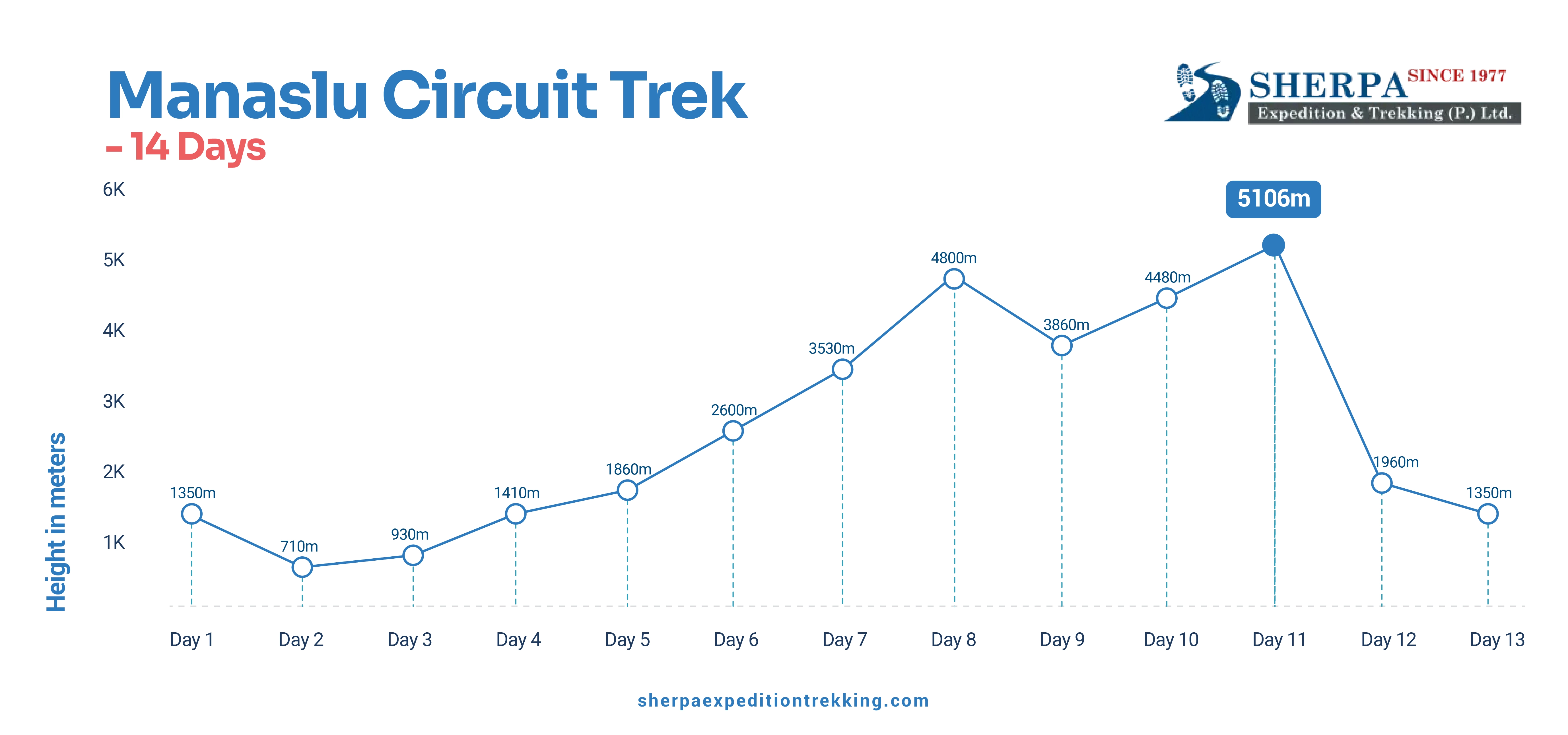
This Larkya La is the highest elevation that we will reach on Manaslu circuit Trek. This route on the very trek to Manaslu takes us to the highest point, which is on the Larkya La pass at 5,106 m. There you'll enjoy a fantastic, panoramic view of the stupendous Manaslu and Manaslu North mountains surrounding it. Here you get to witness some of the most beautiful mountain landscapes with the famous Samdo peak (5,924m), Naike Peak (5,878m), Larke Peak (5,341m) and Cheo Himal from up close.
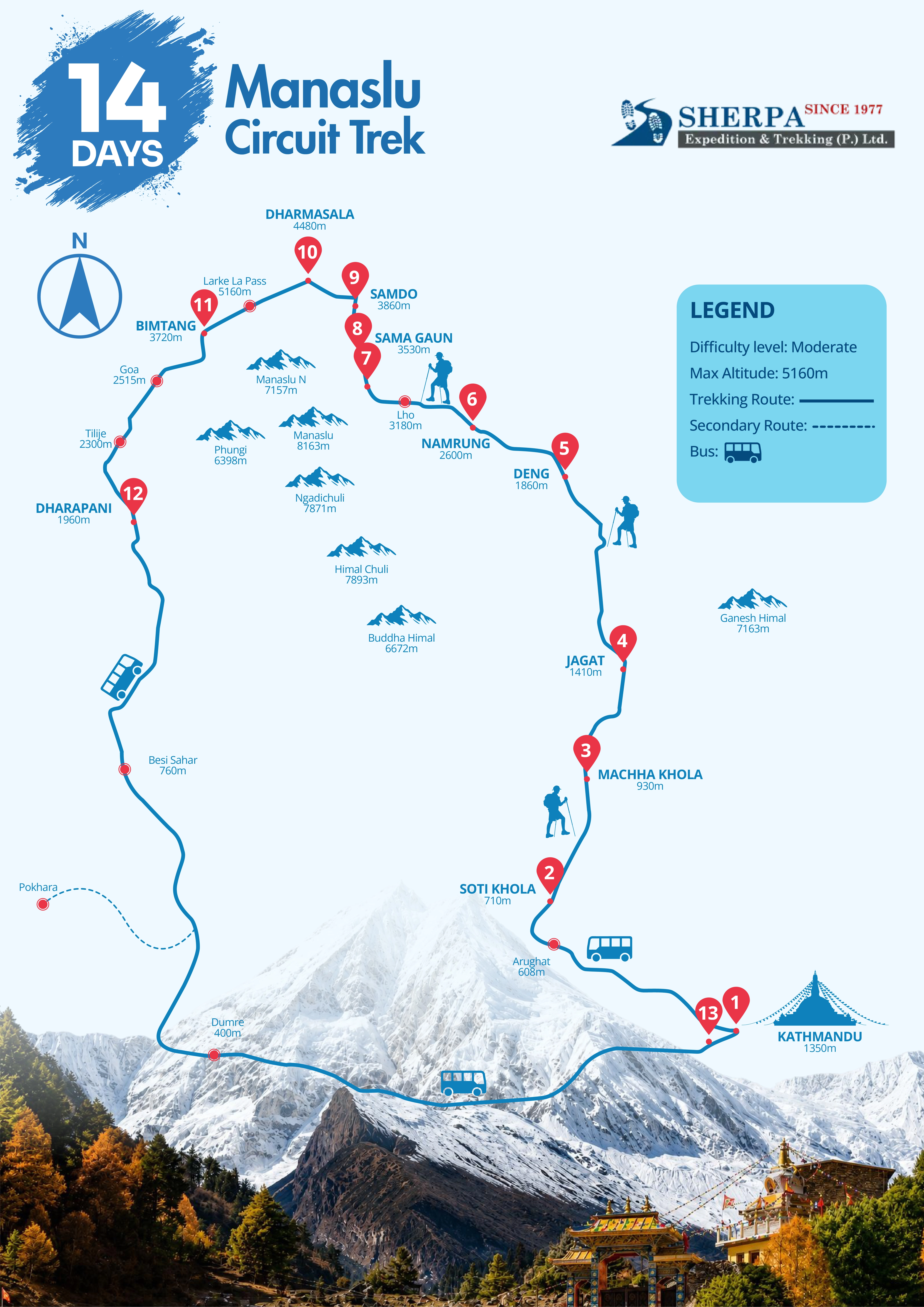
The Larkya La pass lies between the Dharmasala & Bimtang settlement. There is good access to cross to either side of the trekking route from here. The huge Himalayan mountain range is visible along with numerous prayer flags on the top of the Larkya La. It's an area of focal beauty, one of the nicest places to get those souvenir shots taken!
However during the winter months Larkya la is not easily traversable because of the high snow fall sometimes making the entire trail blocked by the heavy snowfall which turns it to a very difficult path. Nevertheless the good thing is that many travellers plan their trek during Autumn or Spring season. Larkya La is reckoned to be the highest challenging altitude trek trail out of the many High Altitude Trekking Routes of Nepal and it is also a part of the list of difficult as well as the popular trekking trails in Nepal.
Beyond the Manaslu Circuit
If you’re looking for trekking trails around Manaslu that are a little bit different to what you’ll find on the main trail (the Manaslu Circuit Trail), then here are some other options in the Manaslu region of Nepal.
Tsum Valley Trek – One of the most popular treks on our list that takes you to an ancient valley tucked away from the world where monasteries and villages are filled with centuries-old traditions. We’ve had many requests from people that opted for this trip asking if we can include them doing the trek along the main circuit too. As such most opt for doing the Tsum Valley Trek first before heading off on the rest of their adventure.
Manaslu base camp - If you want mountain views up very close, be sure to take on this hike to Manaslu base camp. The trail follows a scenic path through glacial terrain with dramatic close-up views of Manaslu’s massive south face along the way.
Annapurna Circuit Trek - There are some adventurous trekkers who also plan to cover the whole route connecting Manaslu Trail with Annapurna Circuit trek. This makes sense as both of these treks meet at Larkya La Pass which is their highest point. So they can travel from one beautiful part of Nepal directly to another.
Ganga Jamuna Waterfall and Barpak Village - Along this beautiful route are some smaller gems such as the Ganga Jamuna Waterfall where you can enjoy nature’s beauty among flowing waters surrounded by forests. Barpak village which was the epicenter of the 2015 earthquake has been reborn with rebuilt stone houses showing their spirit for life.
Great Himalayan Trail - If you're an experienced long-distance trekker, then head for the Manaslu region as part of the Great Himalayan Trail - Nepal's ultimate high-altitude trekking route that covers the whole country. Walking this bit means you join other people who are only really into real adventures.
Manaslu Trek Duration
The duration of the trekking is according to the trekker’s pace, budget and interest. For those who have a shortage of time and good past experience in high altitude and trekking, with a faster itinerary they can complete the trekking in around 12-14 days. But the standard Itinerary 10-16 day trek is more convenient to complete in a slower and comfortable pace that helps with acclimatization.
For those looking to stretch their trek even further, you could take on this extended itinerary route over 18-20 days that also includes some days of rest and opportunities to do some exciting side-hikes. If you’re up for a cultural journey then combining this Manaslu Trek with Tsum Valley will help you explore ancient monasteries.
If you want your Manaslu adventure to be one that’s as safe as it is memorable then our alternative itinerary with extra acclimatizations/side trips might be perfect for you as they minimize your chances of getting altitude sickness but allow for fun detours such as visiting Manaslu BaseCamp or Birendra Lake.
Off-the-Beaten Trekking Trails in Manaslu Nepal
Since Manaslu is a restricted area trek, therefore besides the Manaslu Conservation Area Permit, we require the Manaslu Restricted Area Permit issued by the government of Nepal. In addition to that, there is also a Tsum Nubri rural municipality entrance fee as well as the Annapurna conservation area permit. Such factors put together make this trek a sparsely populated trail, which is wild and rugged in its raw appeal and only offers tea house accommodations. To ensure the trekkers’ safety while on the trek they will need to be accompanied by a licensed Guide. In order to preserve the precious cultural traditions of locals as well as to keep up with the pristine, natural landscape of an alpine world.
Elevation Profile
Manaslu Circuit Trek Itinerary
On reaching Tribhuvan International Airport, our representative from Sherpa Expedition and Trekking will be there to welcome you and take you to your hotel in Kathmandu. On the basis of your arrival time you either relax yourself or take a walk around the lively street of Thamel.
Later we will brief you about your upcoming trek to the Manaslu circuit during the evening. During this session our trek leader will give all details regarding the trek itinerary, trekking permit, essentials packing, etc. Please don’t forget to ask any question if there is one. Spend an overnight at the hotel in Kathmandu so as to get plenty of time for rest both physically and mentally before fun adventure in the Himalayas begins!
Rise and shine for a nice breakfast followed by a picturesque drive along with winding hills road.
While driving, you’ll see a lot of terraces land farmland and some traditional village people also gradually shift towards country life.
However, there are some areas on this route that will be been quite rough to walk. You will see lots of rivers and forests during your travel. Also, you may encounter small roadside settlements when approaching Arughat.
When you reach Soti Khola, you need to check in at one of these amazing teahouses here. Once you settle in, take a walk around while listening to the flowing river – it’s very relaxing!
Your first day of trekking has come! As you leave Soti Khola, you will start following the Budi Gandaki River upstream. The trail leads you through the jungles, small agricultural settlements, and rocky riverside trails.
Today’s trek day has several small ups and downs with crossing some suspension bridges and passing by some Gurung and Magar settlements, providing us an initial view of this culturally diverse land. We can consider our trekking day easy today, which will be a warm-up for other trekking days coming ahead. We reach Machha Khola this evening, where we stay in a cozy tea house tonight, listening to the flow of the river nearby.
Our journey continues today taking us deep within the Manaslu region of Nepal with our passage across multiple suspension bridges along forested areas that contain waterfalls and small villages. We will follow the banks of the mighty Budi Gandaki river as we travel past several hills with some climbs followed by descents and finally arrive at Khorlabesi and then at Tatopain which has beautiful natural hot springs.
The trail gets more rugged while heading towards Jagat, where there are many stone paved trails. Here they will check our permits making sure we enter this restricted area. This village itself has been made the official start point for our hike into this amazing high altitude region. So overnight stay here in this charming stone walled village.
From Jagat onwards, we’ll be walking on dramatic trails passing through river gorges, dense forests and traditional villages, that are characteristic features of this remote Manaslu region.
As we continue from Jagat towards Bhotanagari, we will traverse the beautiful Budi Gandaki River multiple times using different suspension bridges. Here, we can expect to see some wild and mountainous scenery.
While continuing through Salleri, Sirdibas and Philim we can witness a transition in local architecture and culture. This trail goes through various areas of the famous Manaslu Conservation area and crosses into rough terrains covered by forests. We finally reach at Deng- A little village along the river. We will spend our night here in a simple tea house.
On today’s walk, we will have a significant change of scenery and culture. We will go through Rana, Bihi Phedi and Ghap during this trekking route. You’ll also come across several Tibetan Buddhist signs along your journey including Mani Walls, Chortens and Prayer Flags.
Our path takes us through a dense forest full of rhododendron and pine trees As well as crossing over the Budi Gandaki River numerous times with beautiful canyon views. Namrung will be a checkpoint for the second permit inspection here. Also, this is our first glimpse at high mountain peaks and will make an unforgettable overnight stop on this trek.
This day involves walking at some high altitudes on one of the most scenic parts of the whole trek. On our way we will cross several villages such as Lihi, Sho and Lho (the last one offers the closest and finest look of the majestic Mt. Manaslu). Our path will take us past the famous Ribung Gompa - a very beautiful monastery that takes just 30 minutes to explore.
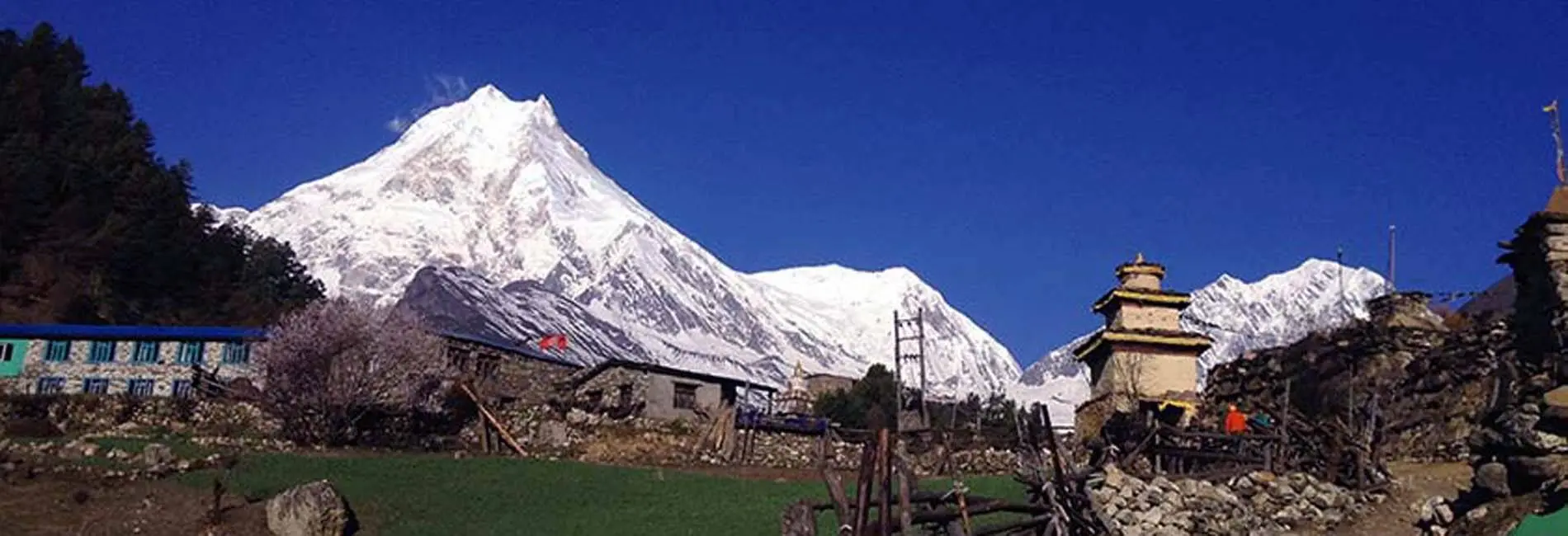
As we approach the next destination, which would be Sama Gaun, the highland terrain comes into full play here, providing amazing panoramic sights of all mountains around. Also, this is a big Tibetan-influenced village, which serves as a vital point for acclimatizing along with excellent views of Manaslu soaring above the settlement throughout our entire stay.
This will be our last crucial rest day that will enable us to get used to the constantly rising altitude level before we proceed further. Most people choose this day to go out for an optional hiking session, either to visit the base camp of Manaslu or the nearby Birendra Lake, where one can witness the spectacular close-up view of the beautiful south face of Manaslu mountain. One may take a walk around in town and discover more about their rich cultural heritage of traditional stone houses, yaks, Tibetan Buddhism, etc. There are many things to do during this day, which is highly recommended to keep yourself entertained. Also visiting the local monastery would be a good idea.
You’ll start by trekking down slightly to cross the river known locally as the Budi Gandaki River. From there you head up again towards Samdo, passing through yak pastures along the way.
This area features some incredibly beautiful scenery as well – you’ll get a chance to view barren high-altitude areas, alongside amazing mountainous vistas that only become more impressive as you head towards Samdo.
The village of Samdo holds a lot of significance due to being close to the Tibetan border. It’s also home to Tibetan refugees who maintain many strong links back to their native country. You’ll even find that they had significant historical trading connections with China using Chinese goods. With such a fascinating cultural heritage behind it, there are lots of things to do here – and because your trekking distance isn’t too long today, you can spend ample amounts of time exploring this unique town.
The journey continues today as we make our way across some more high altitude terrain. We'll cross over an icy stream that flows through this region before making our way towards Dharmasala (also called 'Larke Phedi') - which lies at about 3700 meters. From here, the environment gets evermore barren and the landscape can be quite rugged.
As mentioned above there are only a few basic teahouses that exist in this part of the area. These have been constructed with the sole purpose of supporting those who may need to prepare for their crossing of Larkya La Pass.
While this location might be quite remote (as we’ve mentioned) you are able to enjoy dramatic mountain scenery and a feeling of real high altitude wilderness. Many people will simply spend their spare time here going on a short acclimatization trek followed by an early night’s sleep!
This is certainly one of the toughest and most rewarding days during your whole trek.
You start off early in the morning and have to walk all the way uphill towards the top of this journey -Larkya la pass, which is also considered as the highest point of the trek. You will experience some really difficult stretches that require walking on very steep, icy slopes amidst thin air.
However, everything pays back at the end when you reach the summit of this hill where you get to witness some amazing panoramic views of Manaslu, Himlung Himal, Cheo Himal, and Kang Guru mountains. And then after exploring these beautiful sights, there's another long and steep descent to go down from here until you reach the calm and tranquil little valley called Bimtang situated amidst a group of lofty mountainous peaks.
All-in-all this might be one of those few experiences that will remain etched forever in your heart because crossing over Larkya La has been rated as perhaps the single biggest accomplishment for most trekkers and is considered one of their most memorable highlights of this trip.
After the conquest of Larkya La we are going to have a much needed rest during our trekking tour as we head downwards to lower altitudes. We shall be exploring diverse terrain types including alpine meadows, lush rhododendrons, pines, glacial rivers etc.
The terrain will have several waterfalls with many beautiful traditional villages dotting the landscape of this scenic route leading us into the Annapurna region.
As we walk along the banks of Dudh khola, passing by Gho and Tilje, the architecture and culture of these villages start taking hints from Manangs Gurungs. We’ll see a dramatic change from barren land at higher altitude to greener forested hillsides. After a long day’s trek, we reach Dharapani and are now out of the restricted Manaslu Region, thus allowing ourselves an evening rest before heading back to Kathmandu.
Today on the Manaslu Trek, we will go back to the starting point (Kathmandu) from Dharapani via Besisahar via an overland route in a jeep and bus.
It’s a bit rugged in some parts but has great scenic views too!
We will reach our hotel in Kathmandu after completing this drive. This also allows us some rest time and to take a nice hot shower before having the celebration dinner of our successful trek. You could opt for one if you feel like it. This is an ideal moment to recall all your amazing experiences of the Manaslu region!
Now, this is the last day of the Manaslu Circuit Trek package. According to your flight schedule, we will take you towards Tribhuvan International Airport (Kathmandu) to make your way back.
But if possible, in the morning, you can do some last-minute souvenir buying from Thamel, like handicrafts, pashmina, etc.
Sherpa Expedition and Trekking wants to thank all its clients who have chosen to travel with us throughout their lives, and we hope to have the honor to host them again during their next Himalayan journeys.
MANASLU CIRCUIT TREK INCLUDES & EXCLUDES
Package Included
- Transfer to the airport and transportation using private vehicle.
- Two night's hotel stay on Twin sharing basis at Kathmandu with Breakfast Included.
- Provided Public Transport for going from Kathmandu to Soti Khola and Besisahar to Kathmandu.
- Shared jeep vehicle facility from Dharapani to Besisahar.
- Meal Provision (3 meals a day) (Breakfast, Lunch, and Dinner)
- Provision of the best available Accommodation in the Lodge During your Trek
- Government-licensed English-speaking Trek Leader and Assistant Guide (group size 8+), Porter.
- Experienced and well-trained strong Sherpa Porters having all necessary safety equipment and walking gears along with their salary, food, accommodation, insurance, etc. (One porter will be provided per two trekkers).
- We provide you our best Sherpa Expedition and Trekking guide plus all the required expenses (cost of meals, insurance, pay, lodge, transport, and other necessary equipment, etc.).
- Also, we cover up all the cost for Manaslu Restricted Area Permit, Manaslu Conservation Area Permit, Annapurna Conservation Area Permit, and other necessary permits.
- All government fees, local taxes, and official trekking expenses.
- Arrangements made to assist with rescue operations involving complicated health issues, e.g., altitude sickness (covered by your travel insurance).
- A Sherpa Expedition and Trekking branded T-shirt.
- SEAT Sleeping bag, down jacket, duffle bag, walking poles (if you do not have these).
- Certificate of Appreciation and Completion from “Sherpa Expedition and Trekking” after successful trek.
- Oxygen Meter – To monitor your pulse, oxygen saturation, and heart rate twice daily for early signs of Acute Mountain Sickness (AMS) during the entire journey.
- Included an assistant guide to accompany your group if you have 8+ trekkers.
Package Excluded
- Meals in Kathmandu, specifically lunch and dinner
- Entry Visa Fee – It can be easily obtained upon your arrival to the Tribhuvan international airport in Kathmandu There are different options available for you as: Entry visa fee for $30 USD with validity period of 15 Days, Entry visa fee for $50 USD with validity period of 30 Days, Entry visa fee for $125 USD with validity period of 90 Days.
- Personal travel and medical insurance
- International airfare
- Personal expenses of any kind
- Alcoholic and Non-Alcoholic Beverages: All soup, Tea, Coffee, Hot Chocolate/Cocoa, Mineral Water, Extra Food, Cold / Hot Drinks Purchased along your Trek or during Evenings at our Teahouse.
- Dessert and Sweets: Including but Not Limited to all chocolates, Cake, Pie, Pudding, etc.
- Hot showers and battery charging at teahouses
- Tips for your Guide, Porter and Driver (Tipping is a customary practice)
Note : In case if you decide to come back early from the trek due to ill health / some reason all previous costs already paid i.e flights, hotel,mountain accommodations etc won't get a refund. You will need to cover the extra cost of hotel and food in Kathmandu yourself.
MANASLU CIRCUIT TREK Departures
Every departure listed below is 100% Guaranteed — once you book, your trip will run as scheduled regardless of group size.
Select a departure month
Fill out the form below and a Travel Expert will reach out to create your perfect tour.
Manaslu Trek Route Map
Manaslu Circuit Trek Packing List
This packing list will help you understand all the things that you can take with you for the Manaslu Circuit Trek.
Packing up the essentials would give you convenience as well as security during your trek, but do not carry anything extra that you don’t need to keep your pack lighter.
General
- All-season sleeping bag / Down jacket – Sherpa Expedition and Trekking can provide you with one of them that needs to be returned after your trek
- Duffle bag – Provided by Sherpa Expedition and Trekking during the entire course of your trek, which will need to be returned after completing your trek
- Wind and waterproof, thin-layered jackets – These jackets are necessary as we have mornings and evenings above 3000 meters.
- Daypack for carrying daily essentials
Head, Ears and Eyewear
- A pair of half gloves
- A warm hat that covers the ears
- Sunglasses with UV protection
- Neck warmer
- Sunscreen (SPF 35 to 60)
- Headlamp with an extra set of batteries
Hands
- Walking pole holders – A pair of half gloves (optional depending on your preference)
- Warmer shell gloves with inner liners
Upper Body
- Long-sleeve T-shirts
- Thermal tops
- Wool jacket or fleece pullover
- Sports bras for women and girls
- Water and windproof shell jacket
Lower Body
- Thermal underwear, especially trousers
- Windproof and waterproof trousers
- Warmer insulated trousers
- Comfortable trekking pants
- Extra casual sport pants for teahouse wear
Footwear
- A pair of good-quality waterproof trekking boots
- Sandals for teahouse and evening wear
- You will need about four-five pairs of woolen socks. If they are uncomfortable against the skin then bring sock-liners too as they can prevent blisters from developing
- light shoes/sneakers that would come into play once you reach areas where altitude is low
- Sock liners for added comfort and blister prevention
- Light shoes or sneakers for lower-altitude walking
First Aid Kit and Medicines
- Assorted adhesive bandages (fabric preferred)
- Blister treatment cream or similar
- Insect and anti-itch ointment
- Ibuprofen or other pain-relief medication
- Diamox (125 mg to 250 mg tablets for altitude sickness)
- Wraps, splints, and wound coverings, including butterfly bandages
- Water-purifying tablets
Note: Our company’s guide will carry medicines and first aid kits throughout the trek, but we suggest bringing your personal first aid kit as well.
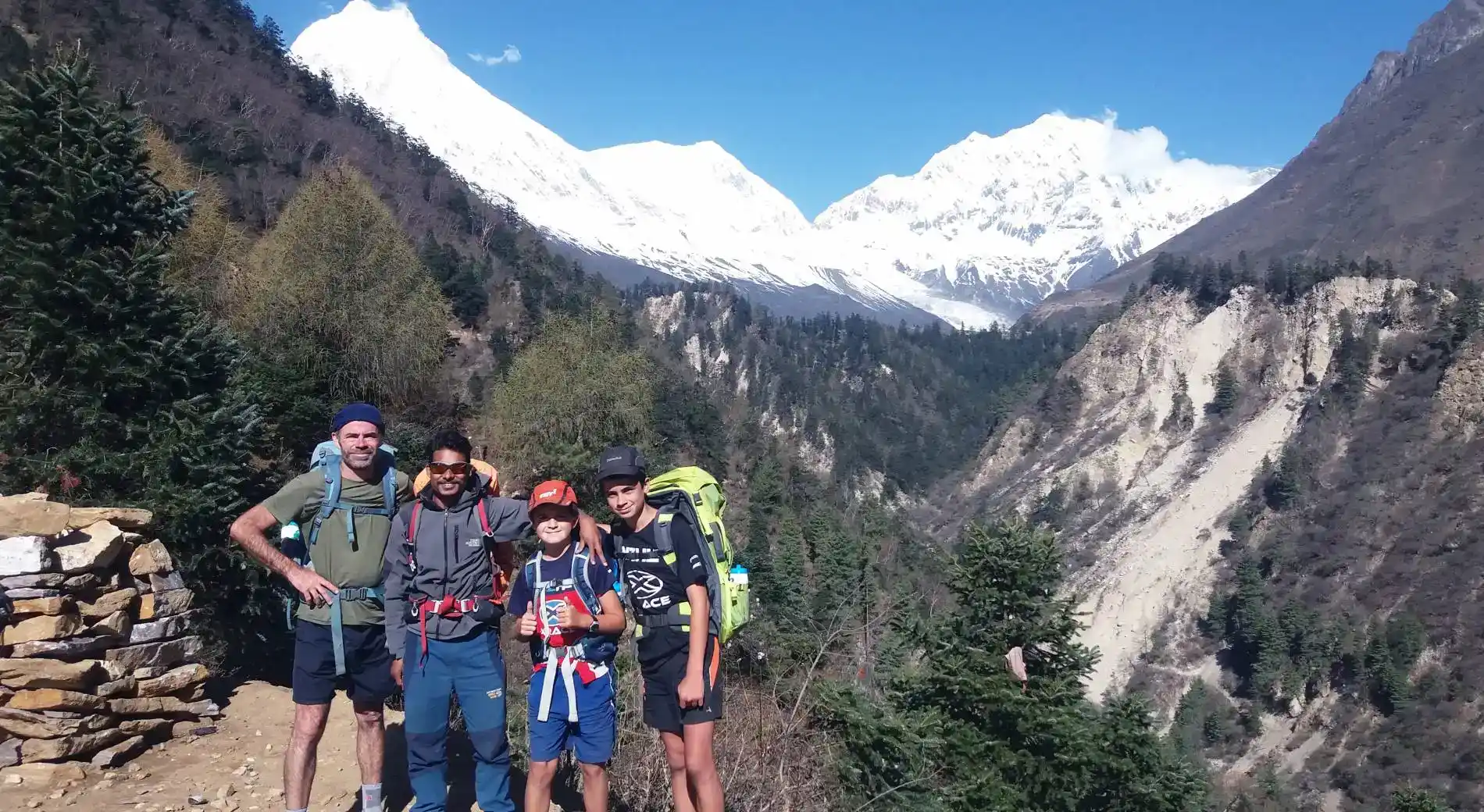
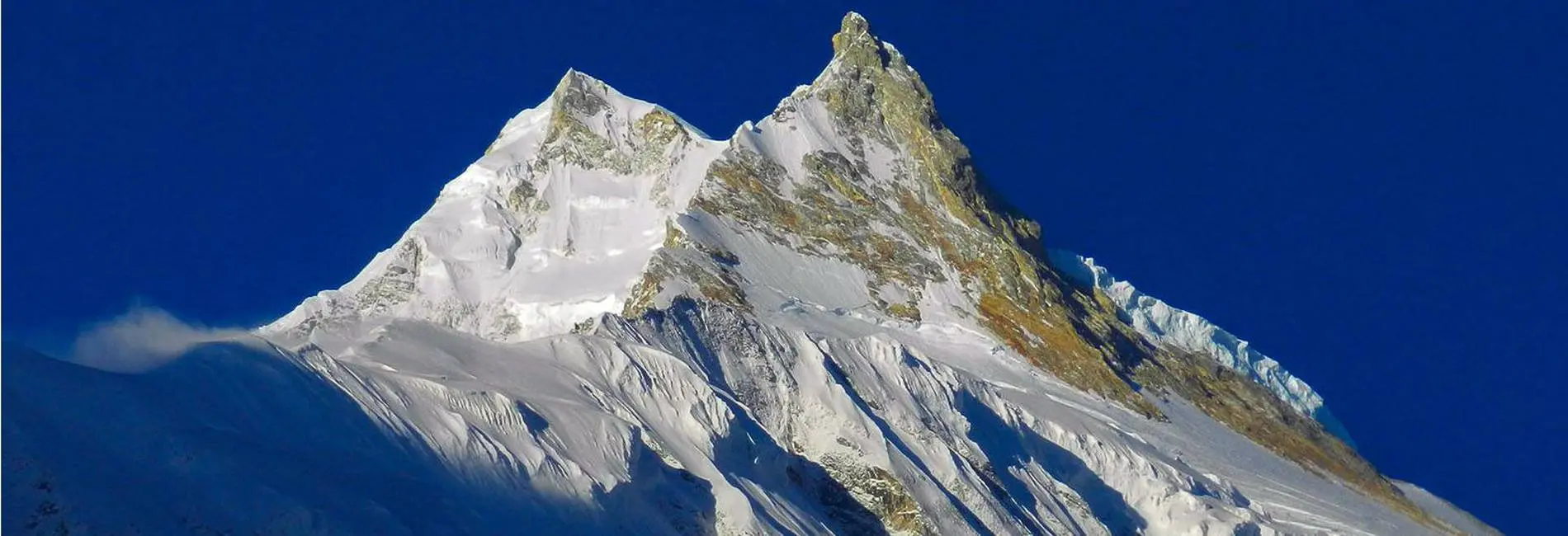
Gallery of MANASLU CIRCUIT TREK

Private and Group Departures
Our Manaslu circuit tours are offered as group and/or private departures.
Fixed date departures are for group travellers. But if you're a solo traveler interested to make the most out of this trip with fellow like-minded trekkers, our Manaslu circuit tour has fixed date departures to suit you perfectly too.
If you prefer having complete control on your own timeline, you have the option to go with our private Manaslu circuit trips at your convenience.
Customization Options
While we offer an itinerary that will work for most people, we know that every trekker’s priorities are different. We offer full customization options - whether you’d like to add on more days of acclimatization, have us incorporate some of the popular side trips (like the Tsum Valley or Manaslu Base Camp), modify the pace at which we trek, or elevate your standard of comfort with accommodations/transportation upgrades, our team can customize this trip perfectly according to your needs, fitness level and time availability.
Booking, Payment and Cancellation Conditions
General Booking Conditions
Please note that you’ll have to submit a copy of your international passport/ID and also pay a 30 % deposit on the total amount for our services during the booking process. It’s important to keep in mind that this payment is not refundable.
You are free to pay the rest of the money once you arrive in Kathmandu prior to starting off on the trek.
Cancellation Policy (Canceled by Us)
If your trip gets canceled by us (Sherpa Expedition & Trekking Pvt. Ltd.), then we will inform you as early as possible and also pay you back 100% of the deposit amount.
Cancellation Policy (Canceled by You)
- If cancellation is made at least 1 year ahead of the date of the tour/trip - Non refundable fees will be charged as 30 % of your overall trip cost.
- If cancellation is done between 6 months to 1 year before you start, then it's also Non Refundable but charges are 50% of the total trip cost.
- If you cancel at least 25 days from the day of departure (trip), this will incur non-refundable charges of 70% of the total tour /trip cost.
- If you cancel your trip 15 days before our journey starts, we'll charge you with a fee equaling 90% of the full cost of the trip. When cancelling 7 days ahead of time, we don't refund at all.
Method of Payment
The payment may be done via wire transfer /credit card
Wire Transfer
- Account Holder: Sherpa Expedition and Trekking Pvt. Ltd
- Current A/C: 12007443030026
- Paying Bank: Himalayan Bank Ltd
- Account Type: Foreign Currency (USD)
- Bank Address: Sorahkhutte Branch, Kathmandu, Nepal
- Swift Code: HIMANPKA
Bank service charges on submissions made from your end are all subject to you. In case of bank transfer, you will get a receipt confirmation upon our confirmation of receiving such funds. Please note that any currency conversion fee that may occur due to national banks/intermediary banks will fall under you. So these costs aren't reflected into total cost paid for your trip.
Credit Card Payment
You can pay for your tour using this online Payment link by filling out all required fields:
Note: Credit card payment has a 4% Processing Fee Extra.
Total Distance of the Manaslu Trek in Nepal
The standard Manaslu Circuit Trek covers a total distance of approximately 177 kilometers (110 miles). But this may vary from one’s chosen trailhead and other factors such as road condition, ending point, etc.
If you take extra kilometers for example during acclimatization walk, visiting Manaslu Base Camp /Birendra Lake, or extending your travel to Tsum valley then the overall trekking distance will be longer.
We will be walking approximately 10-15kms per day taking 5-7 hours per day on average. When there are steep parts near Larkya La Pass we will walk much more slowly. In the valleys, we walk faster.
Manaslu Trek Difficulty
Trail and Terrain Difficulty
A river valley, hills covered with forests and stones steps and trails up rocky steps at altitude . Above Samagaon the terrain turns more challenging. You’ll find yourself on narrow ridgelines, with icy parts near Larkya La and lots of uphill and downhill sections to contend with throughout this trek.
Daily Walking Requirements
Walks are usually 10 to 15 km long, taking 5-7 hrs per day. Some of them are very tiring (like on pass crossing) and involve 7-9 h of constant trekking. The main thing you need to take into account if planning this trip is that you will have several consecutive days of physical activities with very little time for relaxing in-between.
Altitude Challenges
You’ll be going up, from 700m up to 5,106m (Larkya La Pass). As you go above 3,500m, your chance of getting altitude sickness increases. So taking all necessary steps, to acclimatise yourself properly and keeping an eye on the signs will help ensure that you can cross safely.
Fitness and Training Requirements
We recommend that you have good cardiovascular fitness. Training with hikes, runs, or stair climbing over several weeks before starting this trip should prepare you well for the adventure. It's also important that you develop good leg strength and stamina as there will be long days trekking along, and we'll be traversing steep climbs and crossing difficult high altitude passes.
Technical Skills Required
While you won’t need technical climbing skill, some experience could be helpful. You’ll definitely need to feel comfortable walking across uneven/icy/steepest sections but trekking poles are highly recommended to provide more balance when crossing the Larkya La Pass and through the steeper descend section.
Who Should Avoid the Trek?
We recommend skipping this trek unless you're healthy enough to hike without experiencing physical limitations due to an existing medical issue, such as having a condition associated with the heart or lungs. Do not to do this if you’re not quite up to physical form or have only been doing any kind of long hikes, or just not up to walk on extremely hard hikes in most of 14 + days.
Altitude Sickness and Acclimatization
Common Symptoms
Symptoms such as throbbing headaches, nausea, loss of appetite, dizziness and fatigue are all common indicators that you have developed altitude sickness - an affliction that most commonly manifests itself above 3000 metres.
These symptoms tend to intensify rapidly unless acted upon promptly so recognising the initial manifestations of this condition and informing your guide will be crucial to ensuring a safe and successful trek.
Recommended Acclimatization Schedule
The itinerary covers an ideal pace for trekkers, allowing time to gradually increase elevation while taking rest days at Samagaon and Samdo. You shouldn't do this trek too fast, as you must allow your body proper time to adapt by hiking shorter distances during these rest days (the 'climb high, sleep low' principle).
Samagaon and Samdo Acclimatization Days
You'll have two villages (Samagaon and Samdo) where you can take acclimatization breaks. Usually trekkers will spend a day resting and hiking around on shorter trips to some of the view points, monasteries or even Manaslu base camp for acclimatization.
Prevention and Hydration
- Stay Well Hydrated - Drink at least 3-4 Liters of Water per day.
- Walk Slowly – Walk with ease without exerting yourself too much.
- Carry some Diamox (Acetazolamide) – It has been found that most of us trekkers have this drug in our bag just to avoid altitude sickness. But do consult your doctor before taking any medicines for altitude sickness.
When to Descend
Resting doesn't help your symptoms get better - immediately descend. When you continue ascending with these moderate to severe symptoms, this can be very dangerous. Guides will see all potential dangers right away and make fast decisions as to if you need to descend.
Emergency Condition
In case of an extreme level of altitude sickness, higher chances are of having a dangerous disease such as Acute Mountain Sickness (AMS), High Altitude Cerebral Edema (HACE), High Altitude Pulmonary Edema (HAPE). But there will be a Helicopter Rescue Service Provided by Company which ensures that you have access to medical care promptly if needed.
Manaslu Circuit Trek Permits and Guide Requirements
Manaslu Restricted Area Permit
As this is a restricted region, you need to get a special permission from the Department Of Immigration Nepal while visiting Manaslu. Also, you can only arrange your Manaslu tour through the registered trekking agencies and also require a licensed guide.
Manaslu Conservation Area Permit
Also called the (MCAP), this permit is issued by the Nepal Tourism Board to fund conservation work undertaken within that particular area. It’s also required by all trekkers wishing to enter Manaslu Conservation Area zone.
Annapurna Conservation Area Permit
You are going to end your trek close by Annapurna Region. We highly recommended to get Annapurna Conservation Area Permit(ACAP) from the Nepal Tourism Board. You can arrange for this permit in Kathmandu/Pokhara prior to starting on your trek or en route along your trek as well.
Local Municipality Fees
Local trekkers are required to pay an additional entry charge by the local municipality (Tsum Nubri Rural Municipality). All such entry fees go directly into the support of local infrastructure as well as community developments within the Tsum and Nubri Valleys.
Licensed Guide Requirement
A Government-Licensed Guide will be compulsory at all times on the Manaslu Circuit Trek. Independent Trekking without the Government-licensed guide is prohibited in this Restricted Region for trekker’s safety and compliance with local regulation and Permit Requirements.
Trekking Agency and Group Rules
You need to process your permits through a registered trekking agency. Previously, trekkers could only embark on their journey in groups of at least two members. But now, even solo trekkers are allowed to go for this trek with a licensed guide.
This is to maintain certain safety standards while covering all aspects of the restricted Manaslu region properly.
Documents Needed for Permit Processing
A trekker will require their valid passport, Nepal Entry visa details, passport size photo, along with the details of Travel Insurance for processing of permits.
While all these formalities are handled by the trekking agencies they can be made easy if you have those documents already at your disposal before leaving for Kathmandu.
Permit Checkpoints
There are multiple permit checkpoints on the trail of Sagarmatha (Jagat and Deng). All the rangers and check point official will verify your document strictly so please carry your Original Permit and Passport all time during your trek.
Best Time to Trek Manaslu Circuit
Both autumn and spring are considered to be the best months for a Manaslu circuit trekking tour in Nepal because during this period you get nice weather and good views on the mountains.
You can experience the blooming rhododendron forest in springtime and the comfortable temperature will keep you excited all day long. But teahouses will be extremely busy when you visit the most in trekking season.
Autumn (September-November)
Autumn brings us some amazing clear sky days with stable weather allowing for great mountain views. Plus these months witness a slow but steady drop in temperature too which makes them quite pleasant as well. But being such an extremely popular season, I’d suggest booking your trail and tea house accommodation well in advance before they get fully booked up.
Spring (March-May)
You will be able to spot rhododendron flowers blooming everywhere as you travel down to explore the lower parts of the trail while enjoying pleasant daytime temps during this time of year. With more daylight hours, there will also be plenty of time for exploring the trails around during springtime since mountain visibility isn't affected by the season's change much but sometimes could see some afternoon clouds/light showers before monsoon starts.
Accommodation and Food on the Manaslu Circuit Trek
Teahouses and Basic Lodges
The accommodation on the trail includes simple teahouses and lodges. These family-run places tend to be quite basic particularly at high altitudes where there are few facilities because of the remote location.
Rooms and Bedding
The rooms have basic wooden twin beds with thin mattresses and pillows. Although you may be able to find blankets (although I never did), if you bring along a warm sleeping bag that works even better because of significant temperature drops at night due to high elevation.
Shared Bathrooms
The majority of these teahouses have common bathrooms available that include squatter style bathrooms.
Also you will find simpler bathrooms while traveling to high altitudes and also if you are going to stay in some remote villages located nearby Samdo and Dharmsala then you need to prepare yourself with very basic and even outdoor bathrooms.
Hot Showers
Showers can be found at most teahouses for an extra charge. However, they will become more scarce as you go to higher elevation since there’s no solar/gas heated water. Also, some remote lodge accommodations close to the pass don’t provide showers.
Electricity and Device Charging
You’ll have electricity (generally supplied by solar) at almost every teahouse, but there will be some charge to pay for that convenience. At higher altitudes, electricity can get scarce – it’s best if you bring along your own portable power bank.
Internet and Mobile Connectivity
Many lower- and mid route teahouses now have WiFi (for a fee), but connection quality gets worse / unreliable as you approach Dharmasala and Larkya La Pass. In order to get reliable connections across most of lower villages, you need to buy local SIMs which provide far superior signals than what I got from WiFi.
Dal Bhat and Nepali Meals
This Dal Bhat (Traditional Nepali Meal) consisting of rice, lentils & vegetables is amongst the most popular & nutritious meals amongst trekkers. You will surely find your own favorite from these types and many refills offered.
Tibetan-Influenced Cuisine
Higher up on the trek you’ll get more options of Tibetan influenced food like the warm, and filling momo, tsampa and thukpa. This high mountain and cold weather friendly food can keep you up and energized while hinting to the many ties this region shares with Tibet.
Drinking water and purification
Bottled water is a fine choice but generally speaking it is frowned upon. Most trekkers will be using either purification tablets, filters or boiled water provided by teahouses on their journey.
Hydrating yourself well is extremely important during your whole trek because of comfort as well as preventing altitude sickness.
Dietary Requirements
There’s no shortage of vegetarian food at high altitude – that’s actually one of the best things about it, as meat goes bad easily.
While vegan and gluten free options might be harder to find, your trekking agency should be able to accommodate most requests if you give them enough lead time – assuming they have experience catering to dietary requirements.
Manaslu Trekking Cost
Guide and Porter Cost
You are required to hire a licensed guide along with your porter for $ 25 - 35 /day basis on their experiences as well as seasons.
This price will include their foods, accommodations and insurance during all your trekking journey.
Transportation Cost
This includes transportation cost for both way i.e., From Kathmandu to Soti khola and back to dharapani.
The price depends upon the vehicle that you are going (private jeep / local share), the overall prices range is from 150 - 400 dollars.
Permit Cost
The permit cost includes 4 permits such as the Manaslu Restricted Area Permit (MCAP), and ACAP. Overall, the cost is around $100 to $150 depending on the season you go on the trip and how long you’re going to do the treks. These charges are mandatory and we can’t skip these payments because they’re the price that has been set to be able to enter the restricted area of Manaslu.
Food and Accommodation Cost
Tea house accommodations can get pretty inexpensive, usually running just a few dollars per night. However, food prices will run a bit higher than that for each meal. Food and lodging usually run about $25-35/day with this option – although it does rise a little if you travel to higher elevations (i.e., remote areas).
Equipment Rental
You can rent most of the trekking gears including sleeping bags, down Jackets and trekking pole from Kathmandu at quite reasonable day wise rate which makes them very cost effective if you do not wish to buy all these things.
Insurance and Rescue Coverage
It’s essential to invest in comprehensive travel insurance that covers your high-altitude trekking plans with helicopter evacuation included as part of its scope. Although costs will vary from one provider to another and level of cover available may also differ, this sort of expenditure provides you with invaluable financial security should there be an instance when either emergency evacuation or medical treatment is required during your travels.
Additional Personal Expenses
There are also some extra costs that you can expect to pay during your trek - like WiFi, hot showers, battery charging, snacks, etc. Since these are the small expenses that will be paid every single day on our 2-weeks trek, we recommend to budget around an additional amount of $5-10/day for your personal incidentals.
Factors That Change the Total Cost
Depending on your group size, travel time of year, and trip duration, your budget may vary. However, for most people, private treks are much costlier than joining one with other travelers. Plus, during the height of tourism seasons, hotel rooms and transport services get more costly to book due to high-demand scenarios.
What Can You Experience About Culture, Monasteries, and Village Life on the Manaslu Region?
Manaslu has an extremely rich culture which includes Tibetan Influenced Nubri Culture, Gurung and Tamang Communities etc. You will see lots of monasteries (gompas) on your way such as Nubri Monastery and Pungyen monastery. Also chortens, mani walls and prayer wheels are also seen along with colorful prayer flags (lungta). There are some famous mani stones at many places.
You might encounter a few festivals celebrating various forms of buddhism all year round throughout this area. Please respect all local customs while you walk through villages and their sacred spots.
What Makes the Wildlife and Natural Landscapes of the Manaslu Region Unique?
The Manaslu Conservation Area preserves an exceptional diversity of forest and alpine ecosystems - from lush tropical low land jungles all the way up high altitude terrains. Trekking through the Park allows spectacular scenery - rivers and waterfalls, numerous suspension bridges crossing dramatic gorges etc. And offers outstanding opportunities for Wildlife observation – including Himalayan tahr, langurs (and occasionally, snow leopards). Remember to follow our Responsible Trekking Practices, which ensure that we are helping to preserve these amazing ecosystems with their incredible combination of natural beauty and biodiversity.
What Makes Manaslu Base Camp and Birendra Lake Special?
This Manaslu Base Camp and Birendra Lake trip starts at Samagaon. You will spend an approximate time of 5 - 6 hours on hiking to the base camp.
It's worth mentioning that you have to walk uphill towards an altitude of around 4,800m. So, it would be great if you get used here since there'll be no such elevation gain when heading forward.
Keep in mind that your weather forecast might show some clouds, and there's a chance of wind blowing all afternoon long. But still, these two places can be visited on a single day. It allows you to see the glaciers and enjoy the turquoise beauty of Birendra Lake.
Manaslu Circuit Trek Safety Information
Emergency Helicopter Rescue Protocol
You'll be rescued by helicopter anywhere in the region, including places as high as Samdo and Larkya La. That’s where your guide comes in – they’ll get that set up for you (usually within a few hours depending on weather conditions).
So if you’re feeling unwell while you’re here, chances are you’d need to be evacuated back to Kathmandu by helicopter.
Travel Insurance Requirements
Insurance that covers you for high altitude trekking of up to 5,200m is important. Travel Insurance should cover you with helicopter evacuation, medical treatment and trip cancellation.
Suspension bridge safety
A great number of suspension bridges span the river crossing rocky gorges. Walk each bridge separately and maintain a steady pace taking care to avoid slipping or falling onto icy planks.
Snow and Ice Safety at Larkya La
Snow and ice remain well beyond the pass at this height until the end of the trekking season. For optimal lighting conditions, we suggest going out early every day, as conditions tend to worsen by late afternoon due to windy conditions and bad weather. We also advise you to go out with trekking poles on and wear good foot wear as soon as the sun comes up at dawn.
Landslide and Monsoon Risks
There’s also a risk of landslides close to Machha Khola and Jagat, especially with the rainy season. Because of that reason, most agencies don’t book any trips from June to August as there is a high risk of landslides.
Guide Communication and Emergency Planning
Your licensed guide will always have access to satellite communication, even if you lose mobile connection. Discuss evacuation points and alternate ways of getting home prior to departure.
Nearest Medical Support
Basic health post (supplies may be limited) exist in Jagat, Deng and Samagaon. You have to evacuate by helicopter if seriously ill. Please pack your own 1st aid box including altitude meds.
Manaslu Circuit Trek vs Annapurna Circuit Trek
The Manaslu Trail has few crowds because of strict permit requirements and guide rules mandating trekkers hire them. Though both these trails provide great culture overview and beautiful scenery, Manaslu’s highest point of 5,106m compares well with the height of Thorong la from Annapurna. In terms of accommodation, Annapurna gives many options because of its easy accessibility and road development compared to Manaslu where there are only some hotels available. The cost of Annapurna is comparatively less while Manaslu’s cost is high because of the permits needed. If you want to go alone then you can pick Manaslu, but for those who are best suited trekkers wanting great amenities and easy accessibility annapurna would be the best choice!
Manaslu Circuit Trek vs Everest Base Camp Trek
Factor | Manaslu | EBC |
| Crowds | Less crowded | More crowded |
| Culture | Tibetan villages | Sherpa culture |
| Terrain | More varied | Alpine focused |
| Difficulty | Pass crossing | Altitude challenge |
Trekking at Manaslu gives you the chance to explore Tibetan-influenced villages and a variety of terrain over the course of your trip before you climb across the challenging Larkya La Pass. Conversely, trekking Everest Base Camp involves much larger numbers of people, although there’s no shortage of great experiences as well. Here you can learn about rich Sherpa culture while traversing an otherwise pretty alpine landscape that takes place at a high altitude. In terms of difficulty, Manaslu will be tougher for most people due to the challenging mountain pass, whereas Everest Base Camp is all about the extended time spent at a high altitude. However, both of these treks will offer you with physical rewards. If you’re looking for an adventurous journey then definitely go for Manaslu Trek.
On the other hand if you want to feel iconic then choose EBC. This trek is very famous for its beautiful view of Mount Everest along with established trekking infrastructure.
RELATED PACKAGES



FAQS Related to MANASLU CIRCUIT TREK
General Information
Located in the Gorkha district, gandaki province of west-central Nepal the trail crisscrosses the wild and hidden valleys near the tibetan border this is quite area from the highly traveled and very frequented trails of the Everest and Annapurna region.
It belongs to the Manaslu himal, which falls into the famous Himalayan regions and abode the 8th tallest mountain of the world with the altitude of 8163m above sea level.
As you proceed closer to the border with Tibet, you’ll notice certain significant routes of trade and some rare ecosystems. This area has formed centuries of exchange between the nepalese and Tibetan communities who reside within the valleys.
This trekking route also provides a direct connection with the Annapurna region close to Dharapani. A lot of trekkers do this circuit combining both routes. Also, once you cross over Larkya La Pass towards the Annapurna trails, then you can also have many options to choose from for further exploration.
Route and Village
The main village one will encounter on route include Machha Khola, Jagat, Deng, Namrung, Samagaon, Samdo and Bimtang, all the village offer guesthouses and gompa which is the vivid representation of lifestyle of Nubri and Tsum people.
It starts at Soti khola and finish at Dharapani short of Besisahar. This route is a trail of the Budhi Gandaki river valley and it crosses the Larkya La Pass to the Marsyangdi river valley.
The main trail which the trekkers follow is the valley of the Budhi Gandaki, which start from Soti Khola up to Samdo. These high valley walls rise sheer above steep river Gorges.
The altitude steadily gain from the pass cross height to 5106 meters and traverse the larkya la Pass.
Crossing of larkya pass - this section of the trail goes steeply up, is also potentially slippery as it is covered with ice, usually one requires about 7 to 9 hours to cross it and normally the trekkers cross at the pass early in the morning before 4: 00 AM before high wind begins to howl at the pass.
There’s Ribung Gompa (monastery), Pungyen Monastery as well as some other monasteries that can be visited close by Samagaon which is a great place for a rest day if you’re on this trek.
The Tibetan Buddhist religion dominates everyday life throughout the region, as can be seen in the presence of chorten monuments and prayer wheels everywhere, including villages.
Culture and Community
The Trekkers get a flavor of the Gurung, Tamang and Tibetan culture that has shaped Nubri. The flags start to change as we trek higher into the more remote and untouched upper valley, mani walls become more common and an unfamiliar language sneaks into conversations.
This is a sacred Tibetan Buddhist region featuring ancient monasteries and traditions. Local communities have preserved centuries old customs that haven’t been touched by the more commercial trekking routes elsewhere in Nepal.
Conservation and Wildlife
This is a designated protection area which seeks to preserve the forests, wildlife and cultures of the area, allowing tourism to take place responsibly with due regard for the environment and encouraging the participation of local people in community conservation programs.
This zone is a refuge to preserve the area’s forest, flora and fauna as well as its culture. This area was created to promote the integration of tourism and the protection of nature, while also promoting the community participation in conservation for residents.
In addition to many varieties of Himalayan tahr, langurs, musk deer and even an occasional snow leopard, you’ll see numerous species of birds being observed by ornithologists all along this trek.
Permit and Regulation
To preserve its sensitive culture, environment, and its border-sensitive nature. The restriction limits tourism, as it helps in preserving the lifestyle and traditions.
MCAP, ACAP and Manaslu Restricted Area Permit (MRAP) is compulsory for visiting this area. It is managed and booked via registered trekking agency. Also, it needs to be presented to the immigration officers at various checkpoints while on trekking.
A licensed guide must be there all through your trip within the restricted area. Now with the latest rules change from year 2026, you can get solo trekking permit. but then also, you need a licensed guide to go all through the trip.
Here, a valid passport, Passport photographs as well as travel insurance details need to be handed in, in advance via your agency through which you have booked your trek.
Difficulty and Altitude
It is because of the high altitude, isolation and difficulty of Larkya La Pass. One has to be properly prepared to face days long treks and very few facilities.
This altitude related disease will give you headaches, nausea, vomiting and even trouble staying up at higher altitude places more than 3000m. It can cause some fatal illness without treatment so we need to know about its first signs.
You can avoid it by: Hiking and ascent at a slow pace Proper acclimatization sufficient rest days with hydration and acclimatization Listening to your body Taking your own pace and not trying to shorten the planned stages is crucial for avoiding this.
Candidates should be in good shape with regards to heart rate and be used to hiking. Training sessions over a period of weeks beforehand including strengthening and cardio will prepare them for the long hiking days.
Accommodation and Facilities
You’ll find rudimentary teahouses and lodgings with twin sharing facilities. The level of comfort goes down with increasing altitude, but the majority serve warm meals and provide blankets to help with the freezing nights.
Yes, but these are generally minimal and in many cases fee-based, at higher elevations in particular. Trekkers should have a power bank and understand that they'll have less dependable service on the ascent.
You’ll typically find dishes such as Dal Bhat, momos, thukpa (Tibetan food) and the simple standard Western dishes. Menu size dwindles at high altitude so bring some personal treats as a backup just in case.
Safety and Emergency
The short answer is yes! You can charter a helicopter through your guide if required for a medical emergency, but this requires having appropriate travel insurance cover that also covers helicopter evacuations.
The major risk factors when crossing include altitude sickness, icy trails, and sudden weather changes. Cross during early hours of the day and follow with an experienced guide will help you minimize your risk from these challenges.
Yes, that's an absolute requirement. And your insurance plan needs to specifically cover helicopter rescue to a minimum height of 5,200 meters.
Planning and Equipment
You need to have some warm layering clothing, trekking boots, sleeping bags, poles, etc. So that you can enjoy this trekking properly. Also, make sure to prepare well because of high altitudes as we know these areas may have sudden weather changes.
A 4 season sleeping bag would be ideal if you want to sleep during the night when there might be very low temperature. Also, note that due to high elevation tea houses don’t give much heat inside the room. Therefore, we recommend taking a good one.
You must take warm layering clothes, gloves, sunglasses, trekking poles, water and snacks with you on your way to cross the pass.
Remember, if you start at an earlier time then you’ll face freezing temps. Hence dress accordingly.
Comparison
In terms of accessibility, Manaslu is much quieter and more restricted compared to the more developed and accessible Annapurna region. That makes the latter destination ideal if you’re looking for more infrastructure and freedom - perfect for beginner-level trekkers who want to explore the area at their own pace.
The Manaslu circuit includes a mountain pass crossing that will require some extra effort, which means you should be physically ready before setting off. If you’d rather focus solely on high altitudes (and getting a taste of Sherpa culture), then the classic Everest Base Camp (EBC) tour might be better suited to your fitness level and interests.
Commercial and Booking
The cost of a typical or standard Manaslu Circuit Trek will range from $1,200 to $2,000. Price will differ based on various factors including services used and seasons selected. Group sizes, trip durations, levels of accommodations and supports all affect overall costs.
Permits, guides, accommodation, meals, and transportation are generally covered but to know about the actual things that will be covered you should contact your trekking agencies for confirmation as their package differs from each other.
Yes you’re able to customize treks around your unique interests by selecting different durations and paces while adding extra acclimatisation days plus some amazing side trips into beautiful locations such as Tsum valley.
We recommend you book your trip at least 1-2 months in advance. This will give you ample time to get all the necessary restricted area permits. Especially during the high season.
Latest Traveller’s Reviews
Travel experiences of our clients who recently returned from their trips.
100%
Based On 126 Reviews
Peggy Kent
Australia
December 26, 2023
Manaslu Circuit Trek
Evan Manderson
Australia
December 25, 2023
Excellent Service
Tom Muckerheide
Austria
December 21, 2023
BEAUTIFUL MANASLU TREK, GREAT SCENERY

Write Your Review
Average Customer Ratings
How The Travellers Have Rated This Package
121
5
0
0
0


