Everest Base Camp Trek for Senior Trekkers — 11 Days (Helicopter-Assisted)
USD 7,900 / Per Person
Trip Overview
Why This Trek Is Perfect for Senior Adventurers
The Everest Base Camp Trek for Seniors is a thoughtfully designed 11-day journey that brings the world's most iconic trekking destination within reach of older adventurers. By combining traditional trail walking with two strategic helicopter transfers, this package dramatically reduces physical strain while preserving every ounce of the Himalayan experience. You walk where it matters most — and fly where the altitude demands extra caution.
Stand at Everest Base Camp (5,170m) — the legendary starting point of every Everest summit attempt, with towering glacier walls and prayer flags snapping in the wind
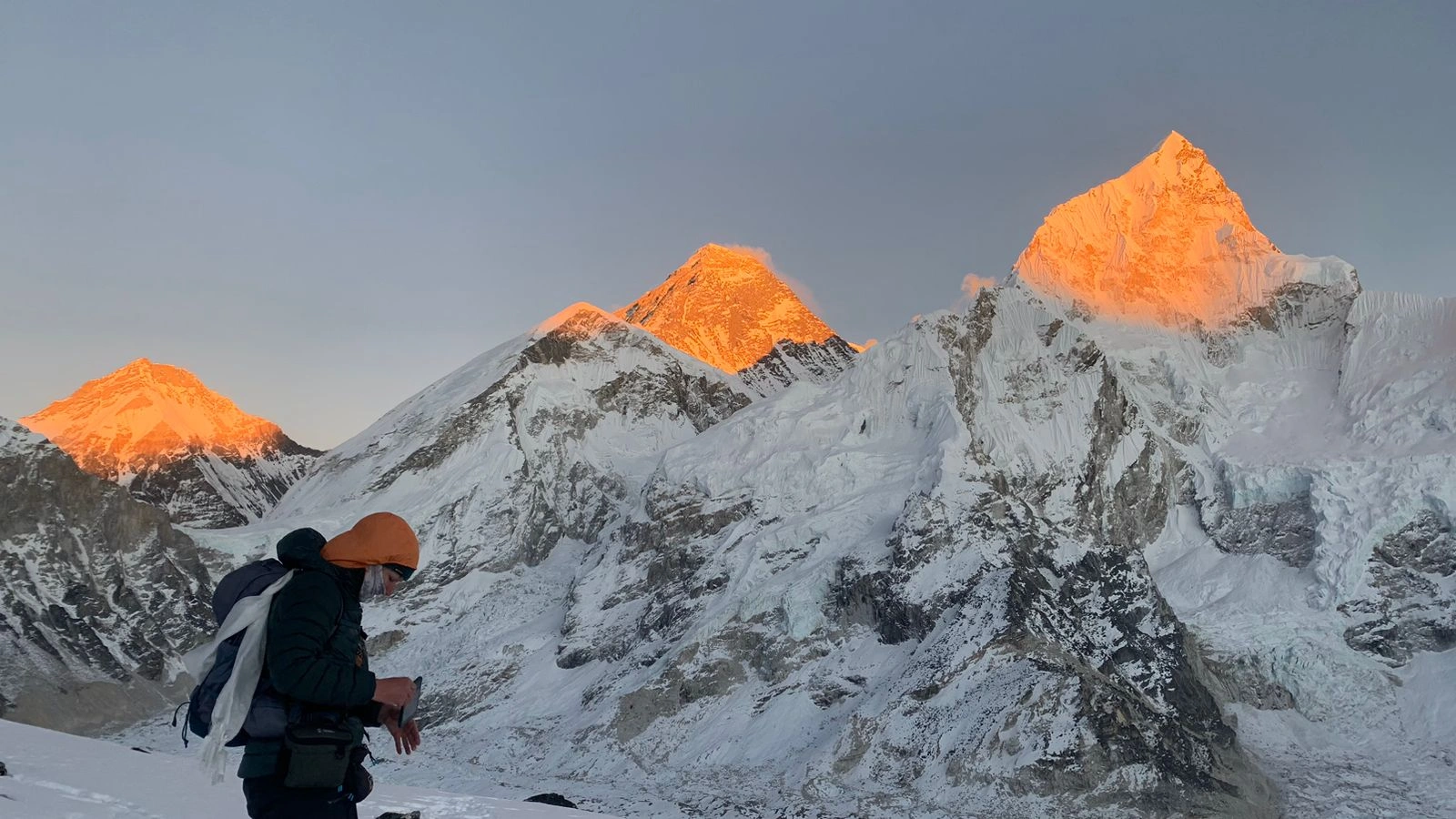
- Watch the greatest sunrise on Earth from Kala Patthar (5,550m) — golden light flooding across Everest, Lhotse, Nuptse, and Pumori in a panorama no photograph fully captures
- Helicopter transfer from Namche Bazaar to Kongde — bypassing the most altitude-intensive section of the classic route and arriving at the spectacular Yeti Mountain Home lodge
- Helicopter transfer from Kongde to Lobuche — a dramatic aerial crossing of the Khumbu glacial valley, cutting days of high-altitude walking while delivering you closer to Base Camp
- Explore Namche Bazaar (3,440m) — the colourful, energetic Sherpa capital of the Khumbu, with bakeries, gear shops, and the warmest mountain hospitality in Nepal
- Walk the Khumbu moraine path from Lobuche to Everest Base Camp — the most emotionally powerful walk of the entire journey, crossing glacial ridges to the foot of the world's highest peak
- Fly Lukla to Kathmandu by scenic mountain flight — 35 minutes of Himalayan panorama from Tenzing-Hillary Airport, one of the world's most legendary airstrips
- Sightseeing day in Kathmandu Valley — UNESCO World Heritage Sites including Pashupatinath Temple, Boudhanath Stupa, Swayambhunath, and Patan Durbar Square
- Stay at Yeti Mountain Home, Kongde — one of the finest high-altitude lodges in Nepal, with breathtaking views, hot showers, and gourmet Himalayan cuisine
- Two dedicated acclimatization days — at Namche Bazaar and Kongde — with guided rest hikes designed specifically for senior trekkers' physiological needs
- Guided by a licensed, senior-experienced Sherpa guide with pulse oximeter monitoring throughout the trek for your safety and peace of mind
- Receive your Sherpa Expedition and Trekking Certificate of Achievement — a testament to one of the most remarkable adventures of your life
Everest Base Camp Trek for Seniors — Full Overview
The Everest Base Camp Trek for Seniors redefines what is possible in high-altitude adventure travel. Designed specifically for trekkers aged 55 and above — or anyone seeking a lower-impact approach to the Khumbu region — this 11-day itinerary uses two carefully placed helicopter transfers to eliminate the most physically demanding altitude gains, while ensuring you experience every iconic landmark, every stirring Sherpa village, and the full emotional arc of the journey to the foot of the world's highest mountain.
The classic Everest Base Camp trek typically requires 14 full days of walking, with cumulative altitude gains that push even younger trekkers to their limits. The Senior EBC package solves this by flying you from Namche Bazaar to Kongde on a shared helicopter, removing three days of demanding uphill trekking and replacing them with an acclimatization stay at the extraordinary Yeti Mountain Home. A second helicopter transfer then carries you from Kongde to Lobuche, placing you perfectly for the final approach to Base Camp without the exhausting multi-day high-altitude climb.
What remains is the best of the trek: the scenic flight to Lukla, the forest trail to Phakding, the iconic suspension bridges and first views of Everest near Namche Bazaar, the emotional walk from Lobuche across Khumbu moraine to Base Camp itself, and the unforgettable pre-dawn climb to Kala Patthar for sunrise over the greatest mountain panorama on Earth. These are the moments trekkers remember for the rest of their lives — and they are entirely yours.
Who Is This Trek For?
This package is designed for senior trekkers, typically aged 55 to 75, who are in reasonable health and have a desire to experience Everest Base Camp without the full physical demands of the classic route. You do not need prior trekking experience. You should be comfortable walking 4–6 hours per day on uneven mountain trails, with trekking poles and a porter carrying your main bag. Our guides walk at your pace. There is no rush, no competition, and no expectation beyond your own enjoyment and safety.
Key Differences from the Classic EBC Trek
- Two helicopter transfers replace approximately 5 days of high-altitude walking
- Dedicated acclimatization at Yeti Mountain Home, Kongde — one of the finest lodges in Nepal
- Maximum lodge comfort wherever available — 5-star hotel in Kathmandu, premium lodges on the trail
- Slower daily pace with extended rest periods — scheduled around senior physiological needs
- Daily health monitoring with pulse oximeter — guide trained in altitude sickness recognition
- Smaller group sizes to ensure personalized attention and support from your Sherpa guide
- Total package: 11 days including 2 nights in Kathmandu, 8 nights on trek, 1 night return to Kathmandu
Physical Preparation Recommendations
We recommend beginning regular walking or light hiking at least 8 weeks before your trek. Daily walks of 60–90 minutes, particularly on hilly or uneven terrain, will make a significant difference to your comfort and enjoyment on the trail. Cardiovascular fitness — not muscle strength — is the primary requirement for high-altitude trekking. Consult your physician before booking, particularly if you have any cardiac, respiratory, or blood pressure conditions. We are happy to provide a detailed health checklist upon request.
Everest Base Camp Trek for Senior Trekkers — 11 Days (Helicopter-Assisted) Day-by-day ITINERARY
Welcome to Nepal. On arrival at Tribhuvan International Airport, our representative greets you with a sign and transfers you by private vehicle to your 5-star hotel in the heart of Kathmandu. The rest of the day is free to recover from your journey, explore the vibrant Thamel district, or simply rest. In the evening, join your Sherpa guide for a full trek briefing covering the itinerary, safety protocols, altitude awareness, and gear check. Overnight: 5-Star Hotel, Kathmandu.
A full day exploring the cultural treasures of Kathmandu Valley, guided by your Sherpa and a local heritage guide. Visit Pashupatinath Temple — Nepal's most sacred Hindu shrine on the banks of the Bagmati River. Walk the circumference of Boudhanath Stupa — one of the largest Buddhist stupas in the world, surrounded by monasteries and prayer wheels. Climb to Swayambhunath (the Monkey Temple) for panoramic views over the Kathmandu Valley. Afternoon visit to Patan Durbar Square and its exquisite Newari architecture.
Rise before dawn for the transfer to Tribhuvan Airport. The 35-minute mountain flight to Lukla (Tenzing-Hillary Airport) is one of the most dramatic short flights on Earth — Himalayan peaks fill every window from takeoff to the legendary steep-runway landing. Meet your full porter team in Lukla, then begin the trail: descending gently through pine and rhododendron forest alongside the thundering Dudh Koshi River, crossing traditional suspension bridges festooned with prayer flags. Arrive at Phakding — a charming riverside village — for your first teahouse dinner and Himalayan night sky. | Overnight: Lodge, Phakding | Meals: Breakfast, Lunch, Dinner | Flight: 35 min | Walk: 4–5 hrs
The finest walking day of the trek. The trail crosses the famous Hillary Suspension Bridge — swaying 60 metres above the roaring Dudh Koshi — and climbs steadily through forest to Namche Bazaar. At around two-thirds of the ascent, on a clear day, you catch your first full view of Mount Everest (8,849m) framed perfectly between the valley walls. Namche Bazaar is the vibrant Sherpa capital of the Khumbu: a colourful arc of teahouses, bakeries, gear shops, and guesthouses built into the hillside. Spend the evening exploring its streets and adjusting to the altitude. | Overnight: Premium Lodge, Namche Bazaar | Meals: Breakfast, Lunch, Dinner | Walk: 6-7 hrs.
This is one of the most important days of the trek. Your body needs time to produce additional red blood cells and adapt to reduced oxygen levels. We follow the internationally proven 'climb high, sleep low' protocol: a morning hike to the Everest View Hotel (3,880m) for your first full panoramic view of Everest, Ama Dablam (6,812m), Thamserku (6,608m), and Lhotse (8,516m). Afternoon is free to rest, visit the Sherpa Culture Museum, browse the Saturday market, or sit at a bakery with Himalayan apple pie and watch yak caravans pass. Your guide monitors your oxygen saturation each morning and evening. | Overnight: Premium Lodge, Namche Bazaar | Meals: Breakfast, Lunch, Dinner.
A highlight of the entire senior package. This morning a shared helicopter lifts you from Namche Bazaar and delivers you on a breathtaking 15-minute flight to Kongde — bypassing three days of demanding uphill trekking through Tengboche and Dingboche while giving you a bird's-eye panorama of the entire Khumbu Valley. You arrive at Yeti Mountain Home, Kongde — one of the finest high-altitude lodges in Nepal. Perched at 3,900m with floor-to-ceiling mountain views, it offers hot showers, gourmet meals, comfortable beds, and a warm atmosphere that makes it feel nothing like a mountain lodge and everything like a retreat. Spend the afternoon resting and absorbing the view. | Overnight: Yeti Mountain Home, Kongde | Meals: Breakfast, Lunch, Dinner | Helicopter: ~15 min
A second dedicated acclimatization day — essential preparation before the high-altitude push to Base Camp. The morning features a guided rest hike on the gentle trails around Kongde, with panoramic views of the Khumbu peaks available from multiple vantage points. Your Sherpa guide leads at a leisurely pace, monitoring your oxygen saturation and heart rate throughout. Afternoon is entirely free — use the lodge's reading lounge, enjoy a therapeutic massage if available, or simply sit on the terrace watching clouds drift across Ama Dablam. By this evening, your body is well adapted and ready for the high-altitude days ahead. | Overnight: Yeti Mountain Home, Kongde | Meals: Breakfast, Lunch, Dinner.
The second helicopter transfer of the trip — and the most dramatic. A shared helicopter carries you from Kongde on a stunning flight over the Khumbu Glacier, past the lateral moraines of the high valley, and sets you down at Lobuche (4,910m) — the traditional staging post for the final approach to Base Camp. The flight takes approximately 20–30 minutes and covers terrain that would otherwise require two days of high-altitude walking. Arrival at Lobuche is a moment of quiet exhilaration: the air is thin, the landscape is bare rock and glacier, and Everest's South Face is visible on the horizon. Rest through the afternoon and evening in preparation for tomorrow. | Overnight: Teahouse, Lobuche | Meals: Breakfast, Lunch, Dinner | Helicopter: ~25 min.
The summit day of the entire adventure. An early breakfast, then the trail winds from Lobuche across the extraordinary Khumbu moraine — a river of ancient ice, blue crevasses, and tumbled boulders the size of houses — to Gorak Shep (5,180m), the final tea-house settlement before Base Camp. Drop unnecessary weight at the lodge, then continue the final 90-minute approach to Everest Base Camp (5,170m). The moment the orange and yellow expedition tents come into view, and the full scale of the glacier and the Khumbu Icefall opens before you, is one that stops trekkers in silence every time. You are at the foot of the world's highest mountain. Your guide takes photos, you take photos, and for a few unforgettable minutes, this is everything. Return to Gorak Shep for dinner and the earliest possible sleep — tomorrow's sunrise is worth rising for. | Overnight: Teahouse, Gorak Shep | Meals: Breakfast, Lunch, Dinner | Walk: 6–7 hrs.
Rise at 4:00am. Pull on every warm layer. Step into the dark and begin the 45–60 minute climb to Kala Patthar (5,550m). As the sky moves from black to deep violet to gold, the south face of Everest — the highest point visible from a trekking trail anywhere on Earth — is set ablaze in alpenglow. Lhotse (8,516m), Nuptse (7,861m), Pumori (7,161m), and Changtse (7,543m) stretch across the horizon. This is the most famous sunrise view in the world, and you have earned it. Descend to Gorak Shep for a hot breakfast, then walk to the Gorak Shep helipad for your helicopter transfer back to Lukla. Board the mountain flight to Kathmandu. Transfer to your hotel. Tonight, celebrate with a farewell dinner. | Overnight: Hotel, Kathmandu | Meals: Breakfast, Dinner | Walk: 2–3 hrs | Helicopter: Gorak Shep to Lukla | Flight: Lukla to Kathmandu.
Breakfast at the hotel. The remainder of the morning is free for last-minute shopping in Thamel, packing your Sherpa Teams certificate, or simply reflecting on what you have accomplished. Our private vehicle transfers you to Tribhuvan International Airport in time for your onward flight. The Himalayas will be in your memory for the rest of your life. | Meals: Breakfast | Transfer: Hotel to Airport.
Everest Base Camp Trek for Senior Trekkers — 11 Days (Helicopter-Assisted) INCLUDES & EXCLUDES
SERVICES INCLUDED IN YOUR PACKAGE
- Airport Transfers: Private vehicle pick-up and drop-off at Tribhuvan International Airport, Kathmandu, on arrival and departure day.
- Kathmandu Hotel: 2 nights in a 5-star hotel in Kathmandu with twin/double room, private bathroom, hot shower, and daily breakfast.
- Luxury Lodges: Highest-standard available lodges at Lukla, Manjo, Namche Bazaar, and Yeti Mountain Home, Kongde. Lobuche and Gorak Shep are authentic teahouses with shared bathrooms.
- All Meals on Trek : Three meals daily throughout the trek — breakfast, lunch, and dinner — from Day 3 to Day 10. Seasonal fresh fruit served every evening after dinner.
- Sherpa Guide : One government-licensed, senior-experienced, English-speaking Sherpa guide. Guide meals, accommodation, equipment, insurance, and flights are all included.
- Porter Service : One Sherpa porter per two trekkers. Porter salary, meals, accommodation, equipment, and insurance are fully covered. Maximum 15kg per porter.
- Trekking Gear: Sleeping bags, down jackets, duffel bags, and walking poles provided if you do not have your own. All items returned after the trek.
- All Permits: Sagarmatha National Park Entry Fee and TIMS Card (Trekking Information Management System) arranged and paid for on your behalf.
- Helicopter Flights: Two shared helicopter transfers: (1) Namche Bazaar to Kongde, (2) Kongde to Lobuche. Plus helicopter from Gorak Shep to Lukla on Day 10.
- Domestic Flights: Return Kathmandu to Lukla to Kathmandu mountain flights including all applicable departure taxes.
- Assistant Guide : For groups of 8 or more trekkers, a second licensed assistant guide accompanies the trek for additional safety and support.
- Health Monitoring: Pulse oximeter used daily to monitor blood oxygen saturation and heart rate. Guide trained in altitude sickness recognition and response.
- Emergency Support : In the event of health complications, emergency rescue coordination is arranged. Costs covered by your travel insurance (insurance not included).
- Trek Certificate: Official Certificate of Achievement from Sherpa Expedition and Trekking on successful completion of the trek.
- Free Hiking T-Shirt: Complimentary Sherpa Expedition and Trekking branded hiking T-shirt — your souvenir of an extraordinary journey.
- All Taxes: All government taxes, local taxes, and official expenses are included in the package price.
- International Flights: All flights to and from Kathmandu are not included. Book well in advance — Kathmandu is served by many international carriers.
- Travel Insurance: Travel insurance with emergency high-altitude helicopter rescue and medical evacuation cover is MANDATORY. This is non-negotiable for senior trekkers.
- Extra Kathmandu Nights: Any accommodation in Kathmandu before or after the scheduled itinerary (Days 1–2 and Day 11) is not included.
- Personal Drinks: Alcoholic and non-alcoholic beverages, mineral water, tea, coffee, hot chocolate, and any drinks purchased at teahouses are paid directly.
- Personal Clothing: Personal trekking clothing and equipment not included in the gear list. Please bring or rent these items separately.
- Guide & Porter Tips: Tips for your guide and porter are warmly appreciated and follow Nepali cultural customs. Suggested: $15–20/day guide, $8–12/day porter.
- Delay-Related Costs: Any additional costs from weather delays, flight cancellations, illness, or itinerary changes beyond our control are not covered by the package.
- Other Personal Costs: Sightseeing entrance fee, Any expenses not explicitly listed in the inclusions section above, including snacks, extra meals, laundry, hot showers, and Wi-Fi charges.
IMPORTANT NOTICE FOR ALL TREKKERS
If you need to return early from the trek due to illness, injury, or any other reason, all costs already paid for flights, helicopter transfers, lodge accommodation, and meals are non-refundable. You will be responsible for covering any additional expenses incurred in Kathmandu for accommodation, meals, and transport. For this reason, comprehensive travel insurance with trip interruption and cancellation cover is strongly recommended in addition to medical evacuation cover.
Everest Base Camp Trek for Senior Trekkers — 11 Days (Helicopter-Assisted) Departures
Every departure listed below is 100% Guaranteed — once you book, your trip will run as scheduled regardless of group size.
Select a departure month
Fill out the form below and a Travel Expert will reach out to create your perfect tour.
ROUTE MAP OF Everest Base Camp Trek for Senior Trekkers — 11 Days (Helicopter-Assisted)
Everest Base Camp Trek for Senior Trekkers — 11 Days (Helicopter-Assisted) PACKING LIST
The following information will give you some idea about what you need to bring for the trek. It is important you do not forget the essential items, as this will determine your comfort and safety on the trek. Equally important is that you do not burden yourself with unnecessary equipment on the trek.
General
- All-season sleeping bag and down Jacket (we can provide if you need it, but it has to be returned after the trek)
- Duffle bag ( Sherpa Expedition & Trekking provides a duffle bag during the trek, butit has to be returned after the trek)
- A wind and waterproof thin-layered jacket (a must-have for morning and evenings above 3,000m)
- Daypack
Upper Body- Head / Ears / Eyewear
- A pair of half gloves
- A warmer hat that covers the ears
- Sunglasses
- Neckwarmer
- Sunscreen (35 to 60 SPF)
- A headlamp and an extra set of batteries
Hands
- A pair of half gloves for walking poles(if you prefer)
- Warmer shell gloves and liner
Upper Body
- long-sleeved t-shirts
- Thermal tops
- wool jacket or pullover
- Sports bras for women and girls
- Water and windproof shell jacket
Lower Body
- Thermal underwear (especially trousers)
- windproof and waterproof trousers
- warmer trousers
- Comfortable trekking pants
- Extra casual sports pants
Footwear
- A pair of good waterproof trekking boots
- Pair of sandals
- 4-5 pairs of woolen socks
- Sock liners
- Light shoes and sneakers
- First Aid Kits and Medicines
- Assorted adhesive bandages (fabric preferred)
- Blister treatment cream or similar
- Insect / anti-itch ointment
- Ibuprofen or other pain-relief medication
- Diamox (125mg to 250mg tablets for altitude sickness)
- Warps, splints, and wound coverings, butterfly bandage
- Water purifying pills
(Note: our company guide will carry the medicines and first aid kits during the trek. However, we recommend you bring your personal first-aid kit as well.
Miscellaneous - but must be useful on the trek
- 4 passport-size photos with the original passport
- Water bottle & filter
- Flight details (please make a copy and leave one pic at our office in KTM because in case you want to change your flight date)
- Bathroom kit (conform, should include toilet paper, plastic bags, hand wipes, towel, and soap, etc.)
Extra things
- Comfortable trekking poles
- Quality energy dry foods (up to you)
- Power bank and music players
- Camera (memory card, chargers, and extra batteries)
Gallery of Everest Base Camp Trek for Senior Trekkers — 11 Days (Helicopter-Assisted)

GOOD TO KNOW ABOUT Everest Base Camp Trek for Senior Trekkers — 11 Days (Helicopter-Assisted)
AGE, FITNESS & WHO THIS TREK IS FOR
There is no maximum age limit for the Everest Base Camp Senior Trek. We have guided trekkers aged 70 and above to Everest Base Camp successfully. What matters far more than your age is your current health and your cardiovascular fitness. If you can walk comfortably for two hours on uneven ground without stopping, you are physically capable of starting this journey.
This trek is designed for trekkers aged 55 and above who want to experience Everest Base Camp without the full physical demands of the classic 14-day route. By replacing three days of high-altitude walking with two strategic helicopter transfers — from Namche Bazaar to Kongde, and from Kongde to Lobuche — we remove the most altitude-intensive sections of the route while preserving every iconic landmark and emotional experience the journey has to offer.
You do not need prior trekking experience. You do not need to have trekked at altitude before. You need a willingness to walk steadily, trust your guide, and give your body the time it needs to adapt.
ALTITUDE & ACCLIMATIZATION — WHAT YOU MUST UNDERSTAND
Altitude is the central challenge of this trek, not physical difficulty. As you ascend above 2,500m, the air contains less oxygen than at sea level. Your body adapts by producing more red blood cells and increasing your breathing rate — but this process takes time. Rush it, and you risk Acute Mountain Sickness (AMS).
Our itinerary is built around two dedicated acclimatization days — at Namche Bazaar (3,440m) on Day 5 and at Kongde (3,900m) on Day 7 — specifically to give your body adequate time to adjust before the high-altitude push to Base Camp. These days are not optional and are not wasted days. They are the reason senior trekkers on this itinerary reach Everest Base Camp safely.
What is Acute Mountain Sickness (AMS)?
AMS is the most common health risk at altitude. Symptoms typically appear above 3,000m and include: persistent headache that does not respond to paracetamol, nausea or vomiting, dizziness, loss of appetite, fatigue beyond normal tiredness, and disturbed sleep. Mild AMS is common and manageable. Severe AMS — which progresses to High Altitude Pulmonary Edema (HAPE) or High Altitude Cerebral Edema (HACE) — is a medical emergency requiring immediate descent.
How we monitor your health:
Your Sherpa guide carries a pulse oximeter throughout the trek. Every morning and evening, your guide measures your blood oxygen saturation (SpO2) and resting heart rate. A SpO2 reading below 75% at altitude, combined with symptoms, is a signal to descend. Your guide is trained in the recognition, assessment, and response to all stages of altitude sickness and has the authority to require immediate descent if your safety is at risk.
The most important acclimatization rules:
— Walk slowly. Never outpace your guide. The Sherpa phrase "bistari bistari" means "slowly slowly" — make it your mantra.
— Drink 3 to 4 litres of water per day. Dehydration accelerates altitude sickness.
— Avoid alcohol above Namche Bazaar. Alcohol impairs your body's oxygen uptake and disrupts the acclimatization process.
— Never ascend if you are experiencing AMS symptoms. Resting or descending for one day often resolves mild AMS completely.
— Do not take sleeping medication above 3,000m. Many sleep aids suppress breathing, which is dangerous at altitude.
— Diamox (acetazolamide) is used by some trekkers as an AMS prevention aid. Consult your physician before the trek — it is available on prescription in most countries and works best when started 24 hours before ascending.
PHYSICAL PREPARATION — START 8 WEEKS BEFORE DEPARTURE
The single most effective thing you can do to ensure a successful and enjoyable senior EBC trek is to begin a structured fitness programme at least 8 weeks before your departure date. You do not need to become an athlete. You need cardiovascular endurance and leg strength for daily walks of 4 to 6 hours on uneven terrain.
Recommended preparation programme:
Week 1 to 2: Walk 45 to 60 minutes every day on flat or gently hilly terrain. Focus on building a consistent daily habit.
Week 3 to 4: Increase to 60 to 90 minutes. Add gentle hills wherever possible. Begin using your trekking poles so your arms and shoulders adapt.
Week 5 to 6: Complete two walks of 3 to 4 hours each week on uneven ground. Wear your trekking boots broken in from new. Carry a light daypack of 4 to 6 kg.
Week 7 to 8: Complete one full-day hike of 5 to 6 hours per week. If possible, walk at any elevated location available to you — hills, stairs, or an incline treadmill — to simulate altitude breathing.
Additional preparation tips:
— Strengthen your knees and quads with daily squats and step-ups. Descents are harder on joints than ascents, and the Lobuche to Gorak Shep and descent sections involve significant downhill walking.
— If you have knee concerns, consult a physiotherapist before the trek and consider trekking pole use and neoprene knee supports on the trail.
— Swimming and cycling are excellent low-impact cardio supplements to walking.
— Practice walking in your trekking boots for at least 4 to 6 weeks before departure. Blisters caused by unbroken boots are one of the most common reasons senior trekkers suffer avoidable discomfort on the trail.
MEDICAL CONDITIONS — WHAT TO DISCUSS WITH YOUR DOCTOR
We strongly recommend a full medical consultation at least 6 weeks before your trek, particularly if you have any of the following conditions:
Heart conditions: Trekking at altitude increases cardiovascular demand. If your cardiac condition is well-controlled and your cardiologist approves moderate physical activity, you can trek safely with our itinerary. An ECG and stress test are advisable for any trekker with a cardiac history.
High blood pressure: Altitude can temporarily raise blood pressure. If your blood pressure is well-managed with medication, trekking is generally safe. Ensure you carry sufficient medication for the full trip plus seven additional days in case of delays.
Diabetes: Blood sugar management changes at altitude. Carry extra supplies of insulin (if applicable), blood glucose monitor, and emergency sugar sources. Inform your guide of your condition and symptoms to watch for.
Respiratory conditions: Asthma, COPD, or any chronic lung condition requires medical clearance before high-altitude trekking. Carry rescue inhalers and ensure your guide is briefed.
Joint conditions: Arthritis and previous knee or hip surgery do not prevent trekking with our itinerary, as the helicopter transfers eliminate many of the most demanding elevation gains. Trekking poles and anti-inflammatory medication are strongly recommended.
Blood thinners and anticoagulants: If you take warfarin, aspirin, or similar medications, inform your guide and carry your medication schedule. Altitude does not directly interact with most anticoagulants, but bruising from minor falls may require monitoring.
Please share your medical history with us at the time of booking by completing our health declaration form. All information is kept strictly confidential and used only to brief your guide on what to monitor.
TRAVEL INSURANCE — MANDATORY FOR ALL SENIOR TREKKERS
Travel insurance is not optional on this trek. It is a non-negotiable requirement for all trekkers, regardless of fitness level or experience. For senior trekkers specifically, the right insurance policy is the single most important preparation step outside of physical fitness.
What your policy must cover:
— Emergency helicopter evacuation from altitude (minimum $100,000 USD coverage)
— High-altitude medical treatment (coverage valid above 5,000m — many standard policies exclude this)
— Trip cancellation and interruption
— Emergency medical repatriation to your home country
— Personal liability
What to check before buying:
— Confirm the policy covers trekking above 5,000m. Many standard travel policies cap coverage at 2,000m or 4,000m.
— Confirm helicopter rescue is covered. This is the most expensive potential cost — a single rescue can reach $10,000 USD or more.
— Check age restrictions. Some insurers impose premium loadings or coverage caps for trekkers over 65 or 70.
— Carry a printed copy of your policy and emergency contact number throughout the trek. Your guide must have the emergency contact number before departure.
Recommended insurers for senior trekkers: World Nomads, Battleface, Allianz Global Assistance, IMG Global, and Covermore all offer high-altitude trekking cover for senior travellers. Compare policies at your country's consumer insurance comparison site.
ACCOMMODATION — WHAT TO EXPECT ON THE TRAIL
In Kathmandu, you stay in a 5-star hotel in the Thamel district with private rooms, hot showers, air conditioning, and all modern amenities.
On the trek, accommodation quality varies significantly by altitude:
Lukla and Phakding: Good lodge accommodation with private or semi-private rooms, clean beds, and basic hot showers. Very acceptable standard for first-night trail lodging.
Namche Bazaar: The best lodge accommodation on the entire EBC trail outside Kathmandu. Private rooms, hot showers, reliable Wi-Fi, bakeries, and a surprisingly wide selection of restaurants. You stay here two nights, which gives you time to settle in and enjoy it properly.
Kongde — Yeti Mountain Home: The highlight lodge experience of the entire trek. This is a premium mountain lodge at 3,900m with panoramic floor-to-ceiling mountain views, en-suite or private bathroom options, restaurant-quality meals, hot showers, and a warm, welcoming atmosphere. For senior trekkers, it is a genuine luxury retreat in the heart of the Himalayas.
Lobuche: Traditional teahouse accommodation with shared bathrooms, simple twin rooms, and basic but warming meals. Rooms are cold at night — temperatures drop to -5°C to -15°C. A quality sleeping bag and liner are essential.
Gorak Shep: The highest and most basic teahouse accommodation on the trek. Facilities are minimal — shared bathrooms, simple twin rooms with thin mattresses, limited hot water. This is authentic high-altitude mountain accommodation. One night here is part of the experience.
Tip for senior trekkers: Bring a sleeping bag liner for teahouse nights above 4,000m. It adds 3 to 5 degrees of warmth and provides a clean sleeping surface. Earplugs help with the noise of a busy teahouse.
FOOD & WATER ON THE TREK
Three meals are included every day throughout the trek. Teahouse menus are broader and better than most first-time trekkers expect. Dal bhat — Nepal's national dish of lentil soup, rice, vegetables, and pickle — is the finest trekking fuel available on the trail and is offered with unlimited refills at most teahouses. Pasta, fried rice, noodle soups, momo dumplings, eggs, porridge, and pancakes are available at every stop.
Important food and water notes for senior trekkers:
— Your appetite will decrease above 4,000m due to altitude. This is completely normal. Eat what you can manage and do not force large meals.
— Carbohydrates are your friend at altitude. Your body processes carbs more efficiently in low-oxygen environments than protein or fat.
— Drink 3 to 4 litres of fluid daily, even when you do not feel thirsty. Dehydration at altitude is a significant AMS risk factor.
— Avoid tap water at all teahouses. Either buy sealed bottled water (1 to 2 USD per litre) or use water purification tablets — both are readily available.
— Hot drinks such as ginger tea, lemon honey tea, and garlic soup are traditional high-altitude remedies for nausea and acclimatization. They work.
— Alcohol should be avoided above Namche Bazaar and used in extreme moderation below it. A single glass of wine at 3,440m has the effect of two glasses at sea level.
HELICOPTER TRANSFERS — WHAT TO EXPECT
This senior package includes two shared helicopter transfers and one helicopter flight on the descent:
Transfer 1 — Namche Bazaar to Kongde (Day 6): A shared helicopter of 4 to 6 passengers. The flight takes approximately 15 minutes and offers spectacular aerial views of the Khumbu Valley, Ama Dablam, and the full Everest massif. Helicopters are weather-dependent — departures can be delayed by cloud, wind, or poor visibility. Our operations team monitors weather daily and reschedules at the earliest opportunity if conditions are not safe.
Transfer 2 — Kongde to Lobuche (Day 8): A shared helicopter of 4 to 6 passengers. The flight takes approximately 25 to 30 minutes across the Khumbu Glacier at altitude. This is one of the most dramatic aerial journeys in the world.
Descent flight — Gorak Shep to Lukla (Day 10): After Kala Patthar sunrise, a shared helicopter carries you from the Gorak Shep helipad directly to Lukla, removing the need for the multi-day descent walk and saving 2 full days of downhill trekking.
Weight limit: Each helicopter passenger is permitted a maximum of 5 to 10 kg of baggage during transfers (policy may vary by operator). Your main duffel bag is transported separately. Carry your daypack, medication, camera, and essentials only on helicopter flights.
Weather delays: Nepal helicopter operations are subject to mountain weather. In the event of a delay, our team accommodates you at the nearest comfortable lodge at no additional cost until the flight can proceed. This is why we advise all trekkers to build buffer days into their international travel schedule when possible.
COMMUNICATION & CONNECTIVITY
Mobile signal: Nepal Telecom (NTC) and Ncell SIM cards provide mobile signal at most points on the EBC trail up to Namche Bazaar and intermittently above. Above Namche, signal is unreliable. Purchase a local SIM card at Kathmandu airport or Thamel for approximately $3 USD — it is the most cost-effective way to stay in touch.
Wi-Fi: Available at most teahouses along the route but slow, unreliable above 4,000m, and charged separately ($1 to 3 USD per use). Do not rely on trail Wi-Fi for important communications. Download offline maps (Maps.me, Gaia GPS, or Google Maps offline area) before departing Kathmandu.
Satellite communication: Your guide carries a satellite communicator for emergency use on sections where standard mobile networks are unavailable.
Notifying family: We strongly recommend informing family members of your daily itinerary so they know approximately where you are each evening. Share the trek itinerary with a trusted contact at home before departure.
MONEY & SPENDING ON THE TREK
All major costs are included in your package. The following are the personal expenses you will pay directly:
Personal drinks at teahouses: Tea, coffee, bottled water, soft drinks — approximately $1 to 3 per drink.
Hot shower fees: $2 to 5 at most teahouses above Lukla.
Wi-Fi: $1 to 3 per session.
Personal snacks: Chocolate, biscuits, peanuts from teahouse shops — $1 to 3 per item.
Laundry service: Available at Namche Bazaar — $3 to 5 per kg.
Guide and porter tips: Strongly encouraged and culturally important. Suggested standard: $15 to 20 USD per day for your guide, $8 to 12 USD per day for each porter. For an 11-day trek, budget approximately $150 to 250 USD total for tips.
Total recommended personal spending budget: $200 to 350 USD in cash. ATMs are available in Kathmandu and Namche Bazaar. There are no ATMs on the trail above Namche — withdraw sufficient cash before departing Namche.
Currency: Nepalese Rupee (NPR) is the local currency. USD is widely accepted at teahouses and by vendors on the trail. Carry a mix of small USD bills and NPR for convenience.
PACKING LIGHT — THE GOLDEN RULE FOR SENIOR TREKKERS
Your main duffel bag (60 to 80 litres, provided by us) is carried by your porter throughout the trek. You carry only your daypack (25 to 35 litres) each day. The weight of your daypack is what you carry for 4 to 7 hours every trekking day — keep it under 6 kg.
Your daypack should contain only:
— 1 litre water bottle (refill at teahouses)
— Rain jacket and warm mid-layer
— Personal medication for the day
— Camera, phone, power bank
— Sunscreen, lip balm, sunglasses
— Snacks and electrolytes
— Trekking pole accessories
— Small first aid kit
Everything else — spare clothing, sleeping bag, extra layers, reading materials — goes in your duffel bag carried by your porter.
A common mistake: Packing too much and distributing excess weight to your daypack. On a senior trek, carrying an extra 3 kg in your daypack for 6 hours at 4,500m is significantly harder than it sounds at sea level. Pack ruthlessly. If you have not worn or used something in the first two days of the trek, leave it at the Namche lodge.
RESPONSIBLE TREKKING
We are committed to responsible and sustainable trekking in the Khumbu region. We ask all senior trekkers to join us in the following practices:
— Use a reusable water bottle and water purification tablets rather than single-use plastic bottles wherever possible.
— Carry all non-biodegradable waste out of the national park. Do not leave any packaging, wrappers, or non-organic materials on the trail.
— Respect the cultural and religious significance of every chorten, mani wall, stupa, and monastery you pass. Always walk clockwise around these structures.
— Ask before photographing local people, particularly women and religious figures. A smile and a gesture of request is always appreciated and usually granted.
— Support local businesses by purchasing snacks, souvenirs, and services directly from trail communities rather than bringing everything from Kathmandu.
— Pay your guide and porter the recommended tip. These wages support Sherpa families and sustain the mountain communities that make this trek possible.
RELATED PACKAGES


FAQS Related to Everest Base Camp Trek for Senior Trekkers — 11 Days (Helicopter-Assisted)
Others
There is no strict maximum age limit. We have successfully guided trekkers aged 70–75 to Everest Base Camp. Age matters far less than overall health, cardiovascular fitness, and mental readiness. We require a physician's clearance for all trekkers aged 65 and above. Please consult your doctor at least 8 weeks before your departure and share any relevant medical history with us at the time of booking.
No prior trekking or mountaineering experience is required. This package is specifically designed for first-time high-altitude trekkers. You should be comfortable walking 4–6 hours per day on uneven terrain. The helicopter transfers eliminate the most demanding altitude sections, and our Sherpa guides walk entirely at your pace with no rush.
Altitude sickness (Acute Mountain Sickness or AMS) is the most significant health risk at altitude, regardless of age or fitness level. Symptoms typically appear above 3,000–3,500m and include headache, nausea, dizziness, and fatigue. Our senior package includes two dedicated acclimatization days specifically positioned to reduce AMS risk. Your guide monitors your blood oxygen saturation (SpO2) and heart rate each morning and evening with a pulse oximeter. If your readings indicate a problem, we will reduce pace or descend immediately. The helicopter transfers also help by allowing your body more time to adapt at each altitude before ascending further.
In the event of a medical emergency requiring evacuation, our guide immediately coordinates with our Kathmandu operations team and the nearest helicopter rescue service. Helicopter rescue from the Khumbu typically reaches any point on the trail within 30–90 minutes. The cost of evacuation (typically $3,000–10,000 USD) must be covered by your travel insurance — this is why comprehensive insurance with high-altitude helicopter evacuation cover is mandatory for all our trekkers. We assist with all coordination and paperwork.
In Kathmandu you stay in a 5-star hotel with private rooms and all modern facilities. On the trail, you stay in the best available lodges at each location. Lukla and Namche Bazaar have excellent lodge accommodation with private or semi-private rooms, hot showers, and good food. At Kongde, you stay at the spectacular Yeti Mountain Home — one of the finest high-altitude lodges in Nepal, with stunning mountain views, hot showers, and restaurant-quality food. At Lobuche and Gorak Shep, accommodation is in traditional teahouses — simpler, with shared bathrooms, but warm and authentic. A sleeping bag liner is recommended for comfort at these higher teahouses.
In spring (March–May): daytime temperatures on lower trail sections are 10–18°C; at Base Camp, 0 to -5°C during the day. Nights at Gorak Shep drop to -10 to -15°C. In autumn (September–November): similar daytime temperatures with colder nights. Above 4,000m, wind is the main weather challenge — windchill at Kala Patthar before sunrise can make -5°C feel like -20°C. Layering is essential. Our gear list is designed specifically for these conditions.
Many trekkers with well-controlled chronic conditions have successfully completed this trek. The key word is 'well-controlled'. We require physician clearance for any trekker with a cardiac, respiratory, or blood pressure condition. High altitude causes the heart to work harder as it compensates for lower oxygen levels. If your condition is stable and your doctor is satisfied you can undertake moderate physical activity at altitude, we welcome you on this trek. Please share your medical history with us in advance so we can brief your guide appropriately.
Yes. Both helicopter transfers — Namche Bazaar to Kongde and Kongde to Lobuche — are included in your package price as shared helicopter flights. The helicopter transfer from Gorak Shep to Lukla on Day 10 is also included. Helicopter seats are shared with other trekkers from our group. In the event of poor weather causing helicopter delays, our team will manage alternatives and keep you informed.
We recommend bringing USD $200–300 in cash for personal expenses. This covers: personal drinks at teahouses ($1–3 per drink), hot showers ($2–5), Wi-Fi charges ($1–3), any snacks or extra food, and guide and porter tips (approximately $150–250 total for an 11-day trek). ATMs are available in Kathmandu and Namche Bazaar — there are no ATMs beyond Namche on the trail.
Nepal is one of the safest trekking destinations in the world for senior travellers. The Khumbu trail is extremely well-maintained, clearly marked, and walked by thousands of international trekkers each year. Sherpa Expedition and Trekking has been operating in the Khumbu region for over 20 years with a perfect safety record for senior clients. Your Sherpa guide is licensed by the Nepal Government, trained in wilderness first aid, and experienced specifically with senior trekkers. Daily health monitoring, mandatory insurance, pre-identified helicopter landing points, and a 24-hour Kathmandu support team all work together to ensure your safety throughout.
Our cancellation policy is: 60+ days before departure — full refund of deposit; 30–59 days before departure — 50% refund; under 30 days before departure — no refund. If you have to leave the trek early due to health reasons or personal circumstances, all costs already paid for flights, helicopter transfers, and accommodation are non-refundable. We strongly recommend purchasing travel insurance that includes trip cancellation and interruption cover in addition to medical evacuation cover.
Booking is simple. Contact us by email at [email protected] or WhatsApp +977 9866007038. We will confirm availability for your preferred dates, send a detailed booking form, and require a 10% deposit to secure your place. The remaining 90% is due 30 days before departure. We respond to all booking enquiries within 24 hours. Visit sherpaexpeditiontrekking.com or sherpateams.com to view the full package and submit an online enquiry.
Latest Traveller’s Reviews
Travel experiences of our clients who recently returned from their trips.
100% of travellers recommend this trip
Based On 5351 Reviews
THANKS!
Amazing Experience!
Professional Trek, Heartfelt Memories – Led by Tshering

Write Your Review
Average Customer Ratings
How The Travellers Have Rated This Package
5242
107
2
0
0


