
MANASLU CIRCUIT TREK 10 DAYS
USD 990 / Per Person
Trip Overview
Are you looking for a remote and unspoiled off-the-beaten-track trek? The Manaslu trek maybe just the one. It is physically tougher than other treks as you trek for up to 8 hours a day. No pain – no gain as the saying goes! This trek compensates for the hard slog by rewarding you with spectacular scenery as you trek through high alpine passes while being surrounded by massive snow-covered peaks, with Manaslu (world’s 8th highest) at the center towering 8163 meters into the heavens. The Manaslu trek is considered a physically harder trek than the Annapurna Base Camp and Everest Base Camp treks.
You will follow a trail via the highest point on the trek, Larkya La Pass (5,106m). You will pass glaciers and be surprised at how close some of these giant peaks appear to you on the trail. Mountains, such as Mt. Himalchuli (7,893m), Mt. Ganesh Himal (7,422m), and Mt. Manaslu (8,163m) appear right in front of your eyes and look to be within throwing distance. In preparation for the higher altitudes we will spend several days of acclimatization at lower altitudes.
The appeal of the Manaslu trek is due to it being “off the beaten track”, and its unspoiled scenery, culturally rich villages, biological diversity, and out-of-the-way lodges/guesthouses. You will come across both Hindu and Tibetan-style Buddhist villages with their distinctive architectural styles and cultures.
The hard slog begins at Soti Khola and ends at Besisahar with the trail snaking its way through Budhi Gandaki Valley, across rivers, to the Pungen Glacier and onward to the ancient Tibetan settlement at Lho.
This trek will leave you captivated and spiritually enriched from visits to various Tibetan Buddhist and Hindu villages. You don’t have to have a super-human level of fitness to attempt this trek, but some prior training and a good level of fitness will make it that much easier. Manaslu, meaning “Mountain of the Spirit” is waiting for you. This is 10 days of absolute bliss!
You can also choose to combine the Manaslu Circuit with a side trip to the isolated Tsum Valley, where time seems to have stood-still and century-old Tibetan traditions still exist.
Sherpa Expedition & Trekking will take care of all permits, meals and accommodation on the trek.
MANASLU CIRCUIT TREK 10 DAYS Day-by-day ITINERARY
Your journey begins with a scenic drive out of Kathmandu, following winding highways toward the lush middle hills of the Manaslu region. As the landscape shifts from urban bustle to terraced fields and river canyons, you’ll travel along the Budhi Gandaki River, eventually reaching the riverside village of Machha Khola for your first night in the region.
The trail traces the Budhi Gandaki through narrow gorges and small Gurung settlements. You’ll walk past hot springs at Tatopani, cross suspension bridges, and follow a gradually rising path until the stone-paved entrance of Jagat, a traditional checkpoint village surrounded by cliffs and waterfalls.
Today’s route meanders through subtropical forests, riverside terraces, and steep upland trails. The valley grows wilder and more dramatic as you pass Philim and the beautiful Ekle Bhatti stretch. By afternoon, the trail narrows into a rugged gorge leading to Deng, a small village influenced by Tibetan culture.
The path climbs steadily through dense pine and fir forests, with glimpses of snow peaks appearing as you ascend. After crossing several wooden bridges and walking through hamlets like Ghap, you’ll follow a forest trail decorated with mani walls and prayer stones before reaching Namrung, a viewpoint village with stunning Himalayan scenery.
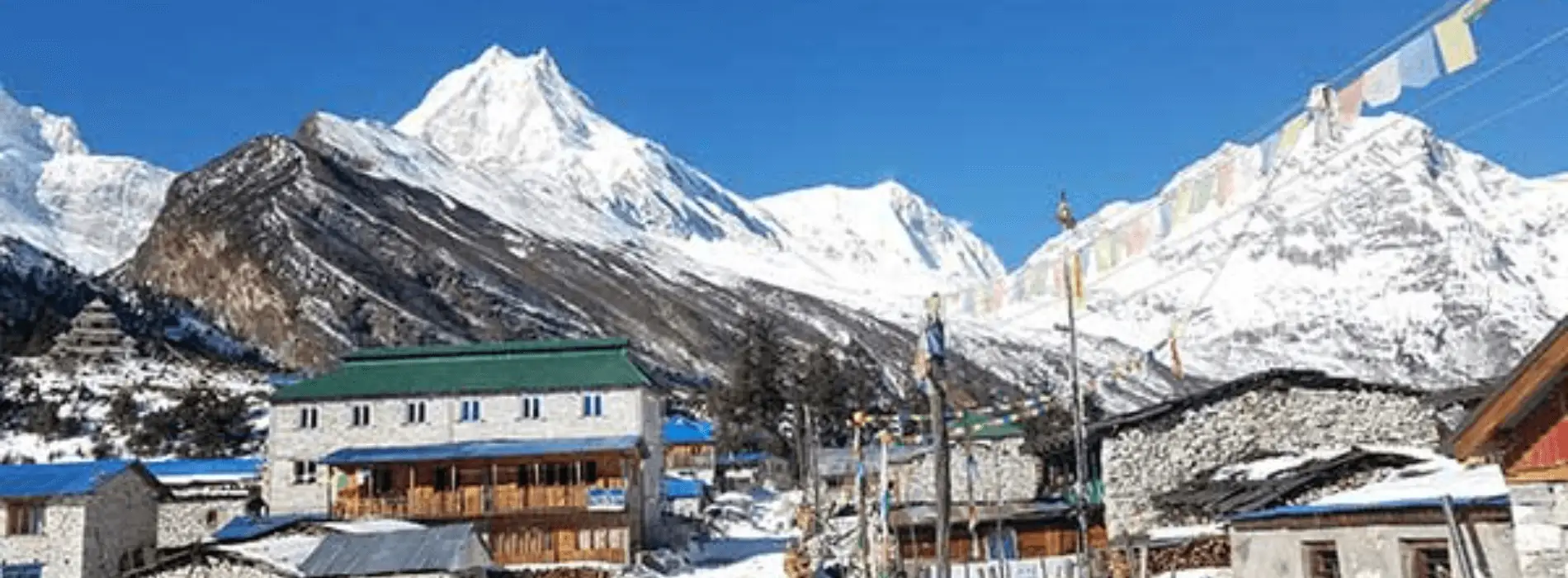
A beautiful day of trekking brings you through alpine meadows, traditional stone houses, and panoramic ridge lines. The trail passes through Lho and Shyala, offering sweeping views of Manaslu, Himal Chuli, and other peaks. You’ll continue into the wide valley of Samagaun, one of the region’s largest and most culturally rich villages.
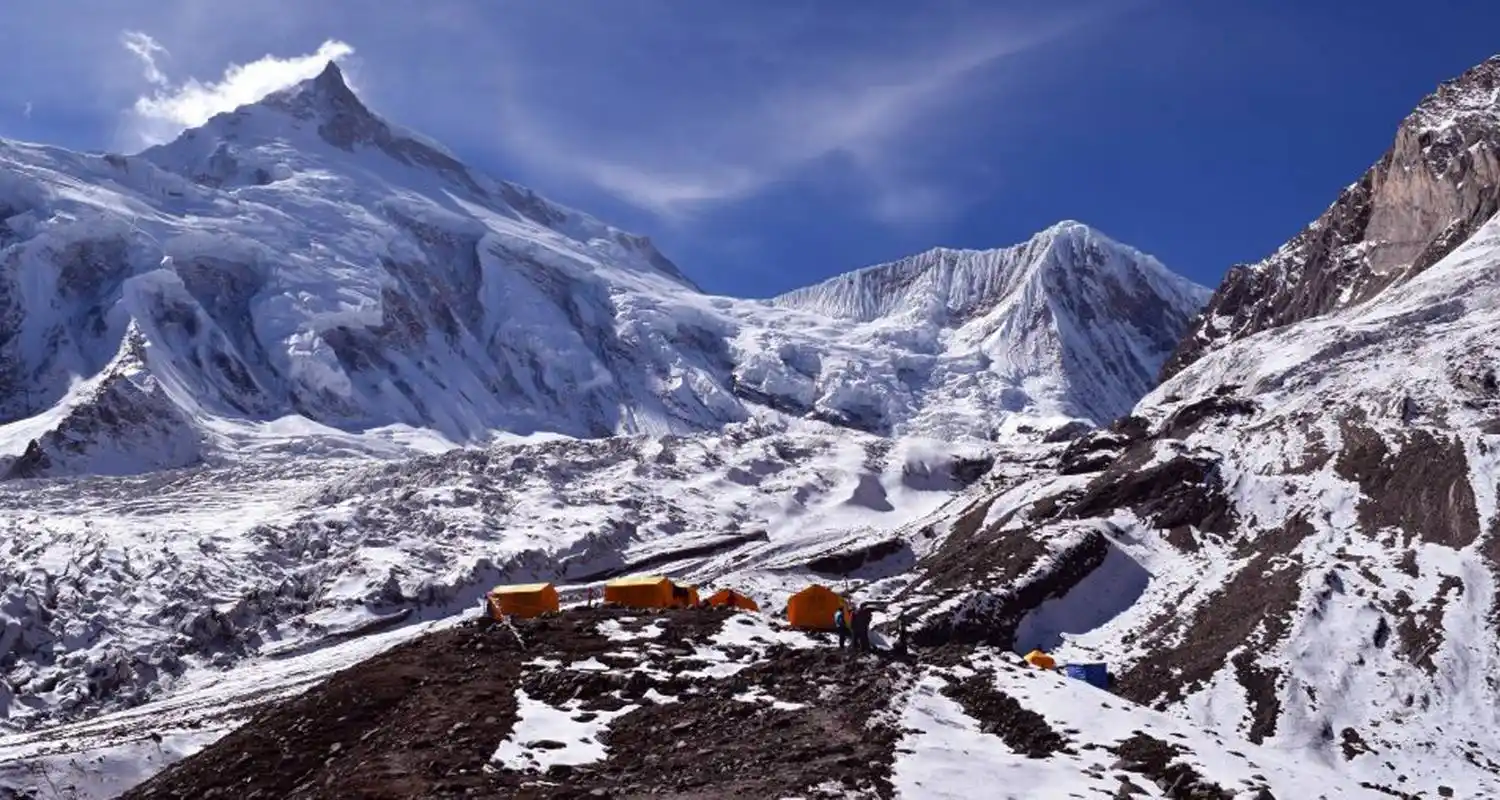
This day is dedicated to altitude adaptation. You can choose a rewarding side hike to Pungen Gompa, a serene monastery beneath Manaslu’s massive south face, or tackle the longer, more challenging hike to Manaslu Base Camp. After exploring, return to Samagaun to rest and enjoy the peaceful alpine atmosphere.
The trail leaves Samagaon with a gradual rise through open yak pastures and glacial terrain, offering uninterrupted views of Manaslu’s massive north face. As you continue climbing, the valley narrows and the air grows thinner, signaling your approach to higher altitude. The final section leads to Dharamsala (Larke Phedi), a rugged high camp nestled below the pass. This simple but strategic stop provides the perfect place to rest, hydrate, and prepare for the upcoming crossing of Larkya La.
With an early start under starlit skies, you ascend gently toward the high point of the trek—Larkya La Pass. The climb is steady and rewarding, unfolding across glacial basins, frozen lakes, and wide snowy ridges. From the pass, the panorama opens dramatically to reveal Himlung Himal, Cheo Himal, the Kang Guru range, and distant peaks of the Annapurna region. After enjoying the views and photos, you begin a long descent toward Bimthang, traversing rocky slopes and grassy meadows until you reach this beautiful high-valley settlement, a welcome rest spot after a big mountain day.
After the high mountain drama, the trail drops into forests of rhododendron and oak, passing through pastoral landscapes and small villages. Clear streams and distant peaks accompany your descent into the Marsyangdi Valley, where you end the day in Dharapani, a gateway town connected to the Annapurna Circuit.
A scenic drive brings you back toward the bustling capital. As the mountains fade into the distance, you retrace your way to Kathmandu, where your journey around the Manaslu region concludes with unforgettable memories of both adventure and culture.
MANASLU CIRCUIT TREK 10 DAYS INCLUDES & EXCLUDES
Costs Include
- All Ground Transportation: Public bus from Kathmandu to Machhakhola, a shared jeep from Dharapani to Besisahar, and a public bus from Besisahar back to Kathmandu.
- Three Meals During the Trek: Nutritious daily three meals—breakfast, lunch, and dinner—served in the best available teahouses along the route.
- Trekking Accommodation: Clean and cozy teahouses/lodges with twin-share rooms throughout the trek for optimal comfort.
- Professional Trek Leader & Support Team: An experienced, government-licensed English-speaking guide, with an assistant guide for groups of 10 or more.
- Reliable Sherpa Porters: Strong, insured, and properly equipped Sherpa porters (one porter for every two trekkers) to carry your luggage safely and efficiently.
- Full Staff Support from Sherpa Trekking & Expeditions: Guides and porters provided through Sherpa Trekking & Expeditions, including their meals, salary, insurance, accommodation, transportation, and essential gear.
- Required Entry Permits: Manaslu Restricted Area Permit, Manaslu Conservation/MCAP fees, and Annapurna Conservation Area Permit (ACAP).
- Government Taxes & Official Fees: All mandatory taxes, service fees, and local administrative charges.
- Emergency Support: Assistance with coordinating rescue operations in case of altitude-related complications or health emergencies
(costs covered by your travel insurance). - Complimentary Gear Use: Use of a sleeping bag, down jacket, duffel bag, and trekking poles if needed (to be returned after the trek).
- Health Monitoring Equipment: Twice-daily checks using an oxygen meter to monitor oxygen saturation, pulse rate, and early signs of AMS—ensuring your safety at higher altitudes.
- Group Support: An additional assistant guide for groups of 8 or more trekkers.
- Special Souvenirs & Recognition: A Sherpa Expedition & Trekking T-shirt, plus a certificate of achievement after successfully completing the trek.
Costs Exclude
- Meals in Kathmandu: Lunches and dinners before or after the trek.
- Hotel in Kathmandu: Accommodation in the city is not included.
- Nepal Entry Visa: Payable upon arrival at Kathmandu Airport: • $30 for 15 days • $50 for 30 days • $125 for 90 days
- Travel & Medical Insurance: Mandatory insurance covering high-altitude trekking and emergency evacuation.
- International Flights: Airfare to and from Nepal.
- Personal Expenses: Souvenirs, laundry, snacks, and personal shopping.
- Extra Food & Drinks on the Trek: Alcohol, bottled drinks, tea/coffee, hot chocolate, soups, mineral water, and any additional food items purchased along the trail.
- Desserts & Sweets: Items such as chocolate, cakes, pastries, pudding, and other treats.
- Luxury Services at Teahouses: Charges for hot showers, battery charging, Wi-Fi, etc.
- Staff Tips: Gratitude for your guide, porter, and driver (tipping is customary in Nepal).
Important Note:
If you return early from the trek due to illness or any personal reason, the costs paid for trekking permits, accommodations, meals, flights, and other services are non-refundable. Any additional expenses in Kathmandu—such as meals, hotels, or transportation—must be paid by the traveler.
MANASLU CIRCUIT TREK 10 DAYS Departures
Every departure listed below is 100% Guaranteed — once you book, your trip will run as scheduled regardless of group size.
Select a departure month
Fill out the form below and a Travel Expert will reach out to create your perfect tour.
ROUTE MAP OF MANASLU CIRCUIT TREK 10 DAYS
MANASLU CIRCUIT TREK 10 DAYS PACKING LIST
The following information will give you some idea about what you need to bring for the trek. It is important you do not forget the essential items, as this will determine your comfort and safety on the trek. Equally important is that you do not burden yourself with unnecessary equipment on the trek.
General
- All season sleeping bag and down Jacket (we can provide if you need it, but has to be returned after the trek)
- Duffle bag ( Sherpa Expedition & Trekking provide duffle bag during the trek but has to be returned after the trek)
- A wind and waterproof thin layered jacket (a must-have for morning and evenings above 3,000m)
- Daypack
Upper Body- Head / Ears / Eyewear
- A pair of half gloves
- A warmer hat that covers the ears
- Sunglasses
- Neckwarmer
- Sunscreen (35 to 60 SPF)
- Headlamp and an extra set of batteries
Hands
- A pair of half gloves for walking poles(if you prefer)
- Warmer shell gloves and liner
Upper Body
- long sleeve t-shirts
- Thermal tops
- wool jacket or pullover
- Sports bras for women and girls
- Water and windproof shell jacket
Lower Body
- Thermal underwear (especially trousers)
- windproof and waterproof trousers
- warmer trousers
- Comfortable trekking pants
- Extra casual sport pants
Footwear
- A pair of good waterproof trekking boots
- Pair of sandals
- 4-5 pairs of woolen socks
- Sock liners
- Light shoes and sneakers
- First Aid Kits and Medicines
- Assorted adhesive bandages (fabric preferred)
- Blister treatment cream or similar
- Insect / anti-itch ointment
- Ibuprofen or other pain-relief medication
- Diamox (125mg to 250mg tablets for altitude sickness)
- Warps, splints, and wound coverings butterfly bandage
- Water purifying pills
(Note our company guide will carry the medicines and first aid kits during the trek. However, we recommend you bring your personal first-aid kit as well)
Miscellaneous - but must useful on the trek
- 4 passport size photos with original passport
- Water bottle & filter
- Flight details (please make a copy and leave one pic at our office in KTM because in case you want to change your flight date)
- Bathroom kit (conform, should be included toilet paper, plastic bags, hand wipes, towel, and soap, etc.)
Extra things
- Comfortable trekking poles
- Quality energy dry foods (up to you)
- Power bank and music players
- Camera (memory card, chargers, and extra batteries)
Gallery of MANASLU CIRCUIT TREK 10 DAYS

GOOD TO KNOW ABOUT MANASLU CIRCUIT TREK 10 DAYS
Accommodation
You will be accommodated in 3-star hotels in Kathmandu. During the trek, we will be staying at lodges/ teahouses. You may find comfortable and better quality teahouses at lower altitudes. It should be noted that at higher elevations the quality of accommodation may not be as good, with more basic rooms with the bare necessities.
Meals during the trek
In Kathmandu, your hotel includes breakfast, whereas all meals (breakfast, lunch, and dinner) will be provided during the trek. A staple food in the mountainous regions is potatoes, oats, buckwheat, Sherpa stew and Tibetan bread. Sherpa’s’ started farming potatoes when the first seeds were introduced to the region in the early 90s. There is a limited choice of food at higher elevations and except many potato dishes. Potatoes are high in carbohydrates – an excellent source of energy needed at high altitudes.
Physical fitness
Some days can be challenging where you often have to walk 6-8 hours a day. You don’t need past experience of hiking or trekking but if you have done any kind of trekking activities then it is always a plus! We have met people from all walks of life, shapes, and sizes who have completed the trek. The only difficult part is when altitude sickness strikes and the effect that it can have on your body. Before leaving for Nepal it is good if you can prepare yourself physically by increasing your stamina and oxygen intake.
Best season to travel
The Manaslu Circuit Trek is usually done in autumn (Sept. to November) and spring (March to May) when you are much more likely to get to have crystal clear views of the mountains and can also enjoy the lush vegetation in the lower regions of the trail - particularly during spring..
Remember – The better prepared – the more enjoyable your trek!
Transportation
We use a private car for sightseeing and for the airport to hotel pick and drop off. We take the bus from Bensisahar to Kathmandu. In the past Aarughat used to be the starting point of the trek but nowadays, due to better road conditions we can travel by bus direct to the Soti Khola. We will travel along secondary (rough) roads all the way to Soti Khola by local bus and from Dharapani to Besishahar we will be traveling by private jeep
Guide and Porter on the trek
We provide you trained & certified trekking guides and porters who will take care of all logistics and a porter for every two trekkers who will each carry about 20 kg ( 10 kg for each trekker). An experienced guide and porter will be the difference between success and failure. They will also save you from taking unnecessary risks during poor weather conditions.
RELATED PACKAGES



FAQS Related to MANASLU CIRCUIT TREK 10 DAYS
Others
The Manaslu Circuit Trek is a popular trekking route in Nepal that takes you around the majestic Mount Manaslu, the eighth highest mountain in the world. It is a remote and challenging trek, offering stunning mountain views, diverse landscapes, and a unique cultural experience.
The Manaslu Circuit Trek typically takes around 9 to 16 days to complete, depending on the itinerary and the pace of the trekker. This duration includes acclimatization days and allows for a more enjoyable and safe trekking experience.
Yes, a special trekking permit and a restricted area permit are required for the Manaslu Circuit Trek. These permits are obtained through a registered trekking agency, and you must be accompanied by a licensed guide.
The Manaslu Circuit Trek is considered a moderately difficult trek. It involves long and steep ascents and descents, high altitudes, and rugged terrain. Previous trekking experience and a good level of physical fitness are recommended.
The highlights of the Manaslu Circuit Trek include breathtaking views of Mount Manaslu and other snow-capped peaks, crossing the challenging Larkya La Pass, exploring remote villages, experiencing the rich local culture of the ethnic communities, and encountering diverse flora and fauna.
The best time to do the Manaslu Circuit Trek is during the spring (March to May) and autumn (September to November) seasons. These months offer stable weather, clear skies, and favorable trekking conditions.
Yes, there are tea houses available along the Manaslu Circuit Trek route. However, the infrastructure is less developed compared to other popular trekking regions in Nepal. It is recommended to carry some cash and be prepared for basic facilities.
Yes, hiring a licensed guide is mandatory for the Manaslu Circuit Trek. It ensures your safety, helps with navigation, provides cultural insights, and supports the local economy.
Latest Traveller’s Reviews
Travel experiences of our clients who recently returned from their trips.
100% of travellers recommend this trip
Based On 14 Reviews
A wonderful Manaslu Trekking
Great Trek
A PERFECT TREKKING AROUND THE MANASLU

Write Your Review
Average Customer Ratings
How The Travellers Have Rated This Package
14
0
0
0
0


